
About the Program
Redesigning Work, Talent and Organizations in the Age of AI
About the Program
Human capital management has traditionally focused on attracting, developing and retaining talent to support business performance. AI is now challenging fundamental assumptions about how work is performed, which capabilities organizations need and how people and intelligent systems should work together.
As AI moves beyond improving individual productivity to reshaping workflows and business value, human capital leaders must reassess strategic priorities, rethink workforce capabilities and prepare their organizations for new ways of working.
The CHRO at the Transformation Table: Leading People, Work and Value in the Age of AI is an applied, two-day executive program combining international industry experience, strategic frameworks and practical exercises. Participants examine emerging human capital priorities, AI-enabled value creation, leadership of hybrid human–AI teams, workflow redesign, human judgment and workforce transformation.
Through real-world executive cases, applied exercises, peer discussions and a closing panel featuring regional industry practitioners, participants develop a Human–AI Workforce Action Board outlining prioritized initiatives, redesigned workflows, performance measures, workforce decisions and a 90-day action plan for their organizations.
Why This Program Now?
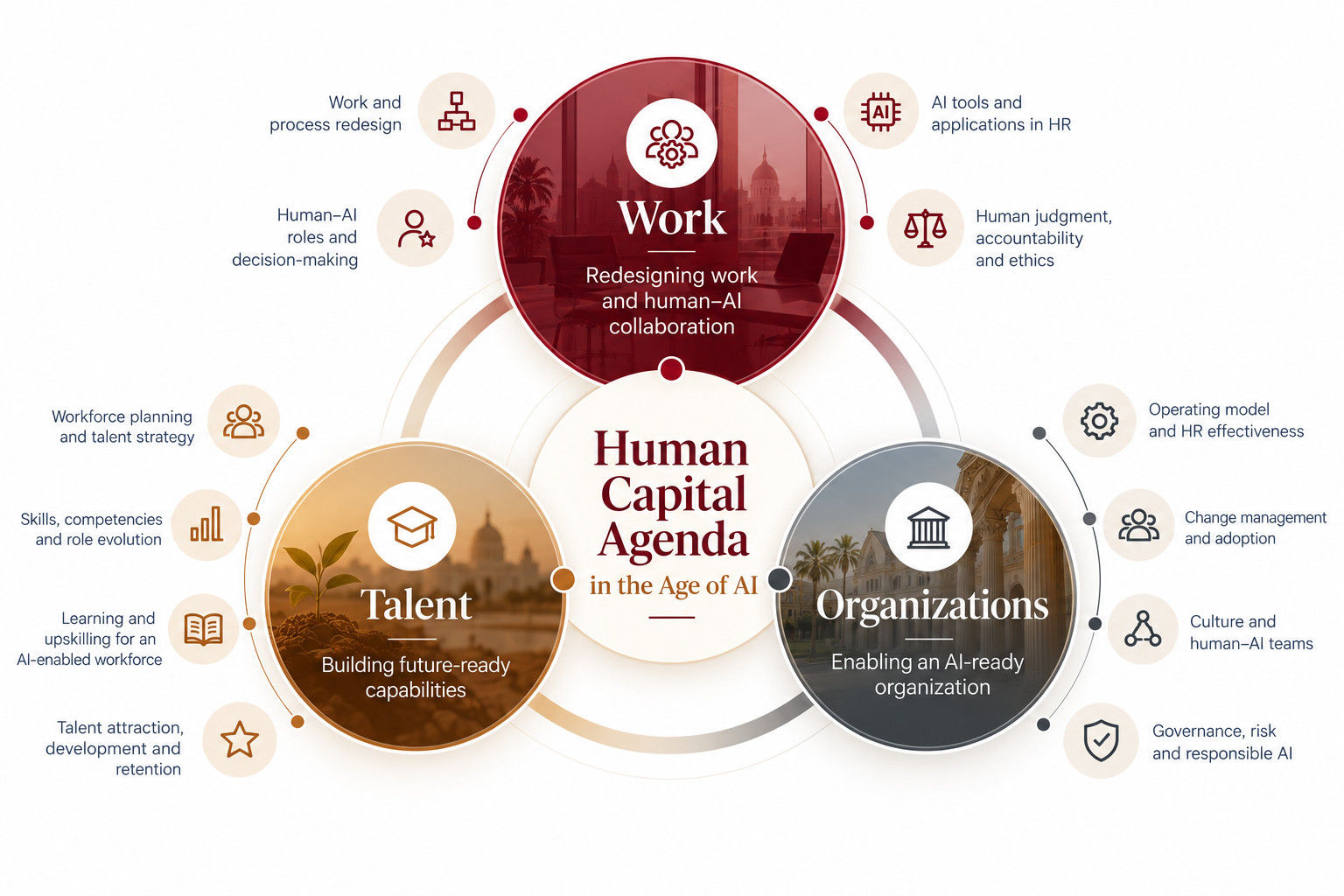
AI is often approached as a technology transformation, yet its implications are fundamentally about people, work and business value. As AI reshapes organizations, CHROs must become strategic co-owners of enterprise transformation, responding to four critical shifts:
1. The Shifting Value of Work
AI is changing the economics of work as tasks that once required significant time and resources can now be performed almost instantly. This challenges established assumptions about which roles, skills and capabilities create business value and where those capabilities should be built.
2. The Changing Nature of Management
As teams increasingly combine people and AI agents, employees are moving from performing work to supervising it. Leaders must rethink management practices, decision-making authority, human oversight and accountability.
3. AI Adoption as a Human Capital Challenge
Resistance to change, unauthorized AI use and employee disengagement can undermine even well-designed AI initiatives. An organization's capacity to absorb change, develop capabilities and prepare its workforce for new ways of working is becoming a source of competitive advantage.
4. Preserving Human Judgment in the Age of AI
As AI increasingly influences how leaders think, analyze and make decisions, organizations must deliberately protect critical thinking, independent judgment and diversity of reasoning. Preserving these human capabilities is essential to effective and responsible leadership in the age of AI.
What We Will Explore

DAY 1: UNDERSTAND THE SHIFT
Explore how AI is changing the economics of work, shifting business value and reshaping roles, skills and where organizational capabilities are built. Examine the changing nature of management, the leadership of hybrid teams of people and AI agents, and the importance of cognitive sovereignty, human judgment and accountability.

DAY 2: REDESIGN THE WORK
Explore how to redesign human–AI workflows, define AI authority and human oversight, and establish performance measures that demonstrate business value. Examine workforce transitions, reskilling, redeployment and adoption strategies. Bring these insights together in a Human–AI Workforce Action Board outlining the first 90 days of implementation, informed by peer discussions and a closing panel with regional industry practitioners.
Who Should Attend?
Ideal candidates
The program is designed for senior executives and experienced professionals responsible for human capital strategy, workforce development, organizational effectiveness and AI-enabled transformation.
- CHROs, Chief People Officers and senior HR executives responsible for human capital strategy and organizational performance.
- Talent, workforce planning, learning and organizational development leaders responsible for building future-ready capabilities.
- HR transformation, people analytics and HR technology leaders seeking to improve HR effectiveness and create value through AI.
- Business, digital transformation and organizational change leaders working to align people, processes and technology with strategic priorities.
Meet the Program Faculty
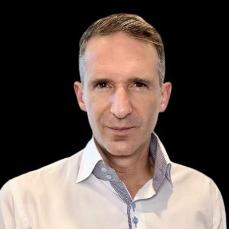
Damien Kopp
Founder and Managing Director, RebootUp | Associate Faculty, Singapore Management University Executive Development
Damien Kopp brings more than 20 years of international experience in AI strategy, governance, innovation and organizational transformation. He advises boards and executive teams across Asia, the Middle East and Europe, working with global organizations including Unilever, UOB and Roche. As associate faculty at Singapore Management University (SMU), he designs and delivers executive programs on AI strategy, governance and transformation. He previously held senior leadership roles at NCS (Singtel Group) and Accenture and holds an Executive MBA from Kellogg School of Management and HKUST.

Tram Nguyen
Founder, ZygomatEQ | Non-Executive Director, National Australia Bank Innovation Centre, Vietnam
Tram Nguyen brings 25 years of international experience in executive leadership, organizational transformation and strategic decision-making. She previously served as CEO of Microsoft Vietnam, country director of Google for Vietnam, Laos and Cambodia, and vice president and general manager at Fox Networks Group in the Mekong region. She now advises governments, boards and CEOs on organizational change, leadership and decision-making under uncertainty. Recognized among Forbes Vietnam’s “10 Next-Gen Women CEOs” in 2024, she holds an MBA from ESSEC Business School.
Delivery Mode

Duration
2 Days Intensive (9:00 AM - 4:00 PM)

Format
In-person

Group Size
15-25 Participants

Delivery
On-campus (AUS)
Entry Requirements
To enroll in this program, applicants must meet the following criteria:
- A minimum of five years of relevant professional experience.
- Currently holding, or preparing to assume, a leadership or decision-making role.
- A bachelor's degree or equivalent professional experience.
- Professional involvement in human capital management, HR, talent development, workforce planning, organizational development, business strategy or AI-enabled transformation.
- Sufficient proficiency in English to participate actively in executive discussions and practical exercises.
**Applications may be subject to review by the admissions committee.
Enrollment Options
YOUR PROGRAM FEE INCLUDES:
- Two days of in-person executive education at American University of Sharjah.
- Research-informed executive briefings, industry perspectives and facilitated peer discussions.
- Hands-on executive case studies, interactive exercises and applied workshops.
- Comprehensive learning materials, practical frameworks and assessment tools.
- Daily refreshments, lunch and networking opportunities throughout the program.
- An AUS Executive Education and Professional Development certificate, subject to successful completion of the applicable program requirements.
- Opportunities to connect with fellow executives, faculty and industry practitioners.
Contact Us
Direct Program Contact
Manal Rayes
Manager of Executive Education and Professional Development
Ready to Shape the Human Capital Agenda in the Age of AI?
Join senior executives and human capital leaders exploring how to set strategic priorities, build future-ready workforce capabilities, create AI-enabled value and lead responsible organizational change.