Department of Economics
Head of Department

Welcome to the Department of Economics, housed in the School of Business Administration at American University of Sharjah. Our faculty members teach and conduct research in areas such as international trade, labor, health, experimental and behavioral economics, econometrics, money and banking, game theory, industrial organization, urban and environmental economics, among others. They have earned doctorate degrees from prestigious North American universities, and have also been research fellows at top-ranked foreign universities and financial institutions. Their expertise ensures high-quality instruction at both the undergraduate and graduate levels. |-BREAK-|
Our department offers two undergraduate degrees in economics—BAE and BSBA—both of which are highly regarded by employers and graduate schools across the world. To cite a few examples, our graduates have gone on to work in leading organizations including the Central Bank of the UAE, Dubai Economic Council, Etihad Airways, Dubai Stock Exchange, L’Oréal and KPMG. Others have secured admission into PhD and master’s programs at places like Columbia University, London Business School, Oxford University, George Washington University and University of Calgary.
It is very exciting to meet students who are interested in studying economics. Please do not hesitate to approach me should you have any questions or queries about our program. Detailed information about our majors, courses and faculty can be found at our department's homepage. For any general enquiry, please write us at [email protected].
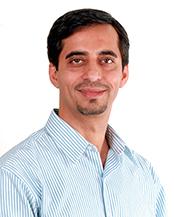
Samer Kherfi, PhD
Associate Professor and Head of the Department
Programs


Why Choose Economics?
Faculty



- ‹ previous
- 5 of 6
- next ›
Economic Seminar Series (ESS)
The Economics Seminar Series of the Department of Economics at American University of Sharjah strives to enhance the learning and research environment for faculty and students alike by providing a platform to prominent scholars from within the department as well as outside to present findings of their cutting-edge research on topics of interest to academia and policymakers.
Through our seminar series, we also aim to establish relationships with colleagues from around the world for possible joint projects and the exchange of ideas and faculty.
All economics and interdisciplinary topics thereof are potential subject matters for the series. Our guests, in the past, hailed from prestigious universities and research institutes such as the Atlanta Federal Reserve Bank, New York University, New York University Abu Dhabi, Deakin University, Sultan Qaboos University, Dubai School of Government, Zayed University, American University of Beirut, Princeton University, Brandeis University, University of London, and University of Dubai.
The seminars are free and open to the public, with no prior registration required.
- Title: Matching with Ordered Objects: Fairness Beyond Priorities
Presenter(s): Sinan Ertemel
Affiliation: Economics, Istanbul Technical University
Date: Wednesday, November 12, 2025
Time: 5:00-6:00 p.m.
Place: SBA 2060Abstract: We study allocation problems where the objects to be assigned are exogenously ordered—reflecting dimensions such as institutional hierarchy and sequential progression—and agents have strict preferences over these objects. Motivated by applications such as pilgrimage and housing lotteries, we introduce a novel fairness concept, ordered fairness, whereby agents who lose more desirable objects gain compensatory priority for remaining ones. We formalize the Ordered Object Matching problem and introduce a mechanism—Ordered Stability Augmented Deferred Acceptance (OSDA)—which integrates ordered fairness into the classic deferred acceptance framework. OSDA guarantees outcomes that are orderedly stable: individually rational, non-wasteful, and fair with respect to the object order and agent priorities. We show that OSDA dominates all other mechanisms that satisfy ordered stability in terms of constrained efficiency. However, we also demonstrate that no mechanism respecting ordered fairness can be strategy-proof. Our results provide a new approach to fairness in matching markets where the order of objects—rather than object priorities alone—plays a central role in defining equitable allocations.
- Title: Predictive Machine Learning for Enterprise Demand Forecasting
Presenter(s): Harshvardhan Rajendra Prasad
Affiliation: MIS, American University of Sharjah
Co-Author: Cara Curtland (HP), Jerry Hwang (HP), Chuck VanDam (HP), Adam Ghozeil (HP), Pedro A. Neto (HP), Frederic Marie (HP), Chuanren Liua (HP)
Date: Wednesday, November 5, 2025
Time: 5:00-6:00 p.m.
Place: SBA 2050Abstract: Machine Learning (ML) has emerged as a powerful tool for predictive analytics, yet it is often criticized as a “black box” with limited interpretability. The seminar demonstrates how ML can drive measurable economic impact when carefully designed and implemented. Drawing on a real-world project with HP Inc., it describes how our team redesigned the global demand forecasting system for more than 18,000 print products sold across 170+ countries. By deploying tree-based models, specifically LightGBM, we achieved substantial accuracy gains over traditional statistical approaches, translating into millions in cost savings. Beyond the forecasting results, the seminar discusses how explainable AI (xAI) techniques such as SHAP values help unpack model behavior and make ML systems more transparent to decision makers.
- Title: Common Ancestry, Uncommon Findings: Revisiting Cross-Cultural Research in Economics
Presenter(s): Tinatin Mumladze
Affiliation: Economics, American University of Sharjah
Co-Author: Boris Gershman (American University)
Date: Wednesday, October 22, 2025
Time: 5:00-6:00 p.m.
Place: SBA 2050Abstract: Empirical research on culture and institutions in economics often relies on cross-cultural data to examine historical or contemporary variation in traits across ethnolinguistic groups. We argue that this work has not adequately addressed the problem of cultural non-independence due to common ancestry and show how phylogenetic regression, along with newly available global language trees, can be used to directly account for this issue. Our analysis focuses on Murdock's Ethnographic Atlas (EA), a widely used database of preindustrial societies, with broader implications for any cross-cultural study. First, we show that various economic, institutional and cultural characteristics in the EA exhibit substantial phylogenetic signals—they tend to be more similar among societies with closer ancestral ties. Second, through simulations in a sample resembling the EA, we demonstrate that phylogenetic correlation leads to severe inefficiency of the standard OLS estimator and unacceptably high type I error rates, even when clustered standard errors are used. Phylogenetic generalized least squares (PGLS), exploiting the information on shared ancestry contained in language trees, improves estimation accuracy and enables reliable hypothesis testing. Third, we revisit some of the recently published results in a phylogenetic regression framework. In many specifications, PGLS estimates differ markedly from their OLS counterparts, indicating a smaller magnitude and weaker statistical significance of relevant coefficients.
- Title: Strategy and Coordination in Risky Household Decisions; Evidence from Bangladesh
Presenter(s): Koustuv Saha
Affiliation: Economics, American University of Sharjah
Date: Wednesday, October 15, 2025
Time: 5:00-6:00 p.m.
Place: SBA 2060Abstract: In patriarchal societies, social norms restrict women’s roles within households to only certain spheres of household decision-making. This leads to asymmetric information about household resources between spouses, making coordination in decision-making difficult. Poor coordination in risk-taking decisions can expose households to excessive risk if a person makes risky decisions under the false impression that their spouse has sufficient assets to cover a crisis or it can cause households to sacrifice legitimate investment opportunities if both spouses are overly conservative. This study investigates whether married couples in rural Bangladesh successfully coordinate risky decisions across their respective domains. Using an artifactual experiment, we elicit individual risk preferences and employ a two-stage lottery-choice game to examine joint decision-making. The results indicate widespread coordination failures: only a quarter of couples successfully coordinate risk-taking decisions, while most either assume excessive risk or become overly conservative due to misaligned beliefs about each other’s choices. Households where spouses exhibit greater divergence in individual risk preferences are more prone to coordination errors, as spouses try to counteract each other’s choice. These experimental findings align with real-world financial behaviors, as women who overestimated their husband’s risk aversion in the experiment also tended to overestimate their husband’s actual savings behavior. This study provides novel evidence on how intra-household information frictions contribute to inefficient risk-sharing and distort critical financial decisions, potentially affecting long-term household welfare. The findings contribute to research on strategic interactions in household decision-making, risk-sharing inefficiencies, and the role of gender norms in shaping financial coordination within families.
- Title: Global and Local Uncertainties in Small Open Economies
Presenter(s): Shi Qiu
Affiliation: Economics, American University of Sharjah
Coauthor(s): Sihao Chen, Haiqin Liu
Date: Wednesday, September 24, 2025
Time: 5:00-6:00 p.m.
Place: SBA 2040Abstract: This paper aims to disentangle the intricate interaction between global and local uncertainties in driving the business cycles of small open economies (SOEs). With structurally motivated local projection estimations, we estimate impulse response functions of macroeconomic variables to global and local uncertainty shocks under weak identification assumptions. We consider global shocks as exogenous to SOEs and identify local shocks using local disasters and granular shocks. Our findings show that global and local shocks are significantly different. Global shocks are found to be aggregate demand shocks, whereas local shocks are aggregate supply shocks, with additional heterogeneity across advanced and emerging economies. We caution against treating global and local uncertainty as the same or using global uncertainty as a proxy for local shocks. Doing so could lead to the incorrect conclusion that all uncertainty shocks are aggregate demand shocks.
- Title: Fading Hopes? Petroleum Production and Industry Supply Chain Growth in Ghana
Presenter(s): Saumik Paul
Affiliation: Economics, American University of Sharjah
Coauthor(s): Dhushyanth Raju (World Bank)
Date: Wednesday, September 3, 2025
Time: 5:00-6:00 p.m.
Place: SBA 2060Abstract: This study investigates the effect of petroleum production in Ghana, which began in 2010, on the industrial supply chain growth in the country. The empirical analysis is motivated by recent research on endogenous growth in input-output linkages. The primary outcome—the share of the mining sector in the total intermediate input usages shows a significant increase, averaging 14 percentage points between 2011 and 2014. In contrast, the results for the secondary outcome—the share of manufacturing sector in the total intermediate input usage—present a mixed picture, with a decline in the heavy manufacturing share and a slight increase in the light manufacturing share. Despite a steady growth in petroleum extraction, Ghana's utilization of petroleum resources in heavy manufacturing has weakened over time reflecting a divergence from global trends.
- Title: Catching Up with the Rich: Foreign Investment, Bargaining Power, and Economic Convergence
Presenter(s): Emin Gahramanov
Affiliation: Economics, American University of Sharjah
Coauthor(s): Ching-Jen Sun (Deakin University, Xueli Tang (Deakin University), Xing Xu (Shanghai Institute of Technology)
Date: April 29, 2025
Time: 5:00-6:00 p.m.
Place: SBA 2060Abstract: Recent geopolitical cataclysms have pushed smaller nations to seek greater bargaining power in the global arena, highlighting the role of bargaining theory in social sciences. In this study, we ask: To what extent does a country’s bargaining strength in international negotiations impact its long-term growth prospects and relative income position? We examine the interplay between foreign direct investment (FDI), bargaining power and income convergence within a neoclassical growth framework, augmented with a recursive investment game. Using declassified General Agreement on Tariffs and Trade (GATT) data, we empirically construct a bargaining power indicator and find that stronger host country bargaining power fosters economic convergence in aggregate GDP ratios. However, this effect does not extend to GDP per capita or long-term growth rates. In contrast, weaker host country bargaining power leads to divergence across all three measures.
- Title: Eating Right: An Experimental Study of the UAE School Children
Presenter(s): Javed Younas
Affiliation: Economics, American University of Sharjah
Coauthor(s): Khusrav Gaibulloev, Gerel Oyun, Dina Tasneem
Date: April 22, 2025
Time: 5:00-6:00 p.m.
Place: SBA 2060Abstract: Considering the impact of learning environment and gender, this study explores how nutrition education influences students’ healthy eating behavior. Through a randomized controlled trial involving 519 fourth- and fifth-grade students at public schools in the UAE, we examine the effects of integrating nutrition lessons into either science or religious/Arabic studies classes. Using lunch experiments conducted immediately after the intervention and three months later, we assess changes in their dietary choices. While nutrition education enhances students’ knowledge, its influence on actual behavior differs by context and gender: significant improvements appear only among girls taught within religious studies class. This suggests that cultural and pedagogical factors shape intervention effectiveness. Our findings underscore the importance of tailoring nutrition education to specific educational and social contexts, while also incorporating reinforcement measures to sustain long-term impact.
- Title: Nature of Inequality and Allocation of Talents: Some Empirical Evidence
Presenter(s): Louis Jaeck
Affiliation: Economics, American University of Sharjah
Coauthor(s): François Facchini, Hajer Kratou
Date: April 15, 2025
Time: 5:00-6:00 p.m.
Place: SBA 2060Abstract: This article aims to show that the nature of inequalities influences the structure of human capital in an economy. There are two types of income inequality: income inequality resulting from rent-seeking activities and income inequality resulting from profit-seeking activities. In countries where income inequality inequalities are induced by rent-seeking, young talents would pursue career choices in law. Such a demand for legal expertise is driven by public sector jobs that are prominent in a rent-seeking society as well as the need for lawyers and tax optimization specialists to comply with state regulations. In countries where income inequality is driven by profit-seeking activities, the demand for sciences and engineering skills are crucial. In such a free-market institutional environment, potential high earnings are resulting from risk-taking activities and entrepreneurship rather than income derived by public sector jobs. The hypothesis is tested on panel data covering the period 2000-2020 and 81 countries with different income levels. We explore two econometric techniques. First, we use the two ways fixed effects and second, we use the system-GMM (Generalized Method of Moments) estimation to tackle the endogeneity issue. The measurement error related to our dependent variable and the reverse causality are the two main reasons for the existence of endogeneity in the context of this study. Our results show that when income inequalities are conditioned by institutional quality, income inequality is reliably positively associated with the share of students majoring in sciences. In other words, there is a positive relationship with productive inequalities and career choices in productive fields. Similarly, a second result shows that when rent-seeking-institutions dominate the institutional setting, income inequalities are predominantly unproductive, explaining the rising gap between the share of students enrolled in university law education and those enrolled in university science education. Hence, the nature of inequalities influences the structure of human capital in an economy. This result can exacerbate the shift towards deindustrialization in countries where rent-seeking behaviors are prevalent, but it can also promote the status quo because individuals endowed with skills and human capital to extract rents are unfitted to enrich themselves through entrepreneurship in the marketplace.
Presenter(s): Kimberly C. Gleason
Affiliation: Finance, American University of Sharjah
Coauthor(s): Zaher Z. Zantout, Deborah L. Smith, Feras M. Salama
Date: February 3, 2025
Time: 5:00-6:00 p.m.
Place: SBA 1174Abstract: Aiming to rise in the well-publicized annual academic rankings has become a global social phenomenon among business schools and universities. We demonstrate that agency issues, in a context characterized by academic capitalism and institutional isomorphism, often explain the reason many business schools not only surrender to, but rather actively pursue, these simplistic rankings despite their detrimental social welfare effects. We also uncover stylized facts relating to reaching the top 100 schools in research productivity worldwide as a strategy to become visibly successful hurriedly. We find that few schools accomplish this target and most of them cannot maintain their success for long. These findings and the clear negative welfare effects of pursuing rankings necessitate adopting a different strategy. We show that solidifying a business school’s genuine legitimacy can be achieved with a three-pronged strategy: (1) through collective action, educating users of academic rankings and providing them demonstrably better alternatives; (2) by individually, adopting a mission which recognizes the idiosyncratic features of the school’s unique ecosystem and the needs of its heterogeneous stakeholders; and (3) by strengthening internal organizational and governance measures that preserve the quality sources of its genuine service to the public good.
- Title: Under the Shadow of the Next Quake: The Effect of Earthquake Risk on Housing Prices in Istanbul
Presenter(s): Ismail Genc
Affiliation: Economics, American University of Sharjah
Coauthor(s): Oguzhan Cepni, Lokman Gunduz, Muhammed H. Yilmaz
Date: January 21, 2025
Time: 4:45-5:45 p.m.
Place: SBA 2060Abstract: Using a unique micro-level dataset of house prices, we find that households in İstanbul have re-assessed the risks associated with earthquakes following the Kahramanmaraş Earthquake Sequence on February 2023. Our baseline findings spanning the interval between January 2022 and February 2024 show that İstanbul neighborhoods with a lower exposure to earthquake risk reflect a significant premium relative to high-risk areas following the newsfeed about Kahramanmaraş Earthquake. The main inferences concerning house prices are invariant to a battery of robustness checks. We also find that house rents in low-risk İstanbul neighborhoods have increased more compared to high-risk areas. Our additional estimations indicate that houses built before the Turkish Earthquake Code of 2007 are heavily discounted in high-risk areas compared to those built afterward. Lastly, the earthquake risk premium observed in house prices in low-risk areas diminished when the socioeconomic status of the area is considerably high. These findings have important policy implications for the better understanding of the earthquake risk pricing in the housing market of Türkiye.
Student Economic Association
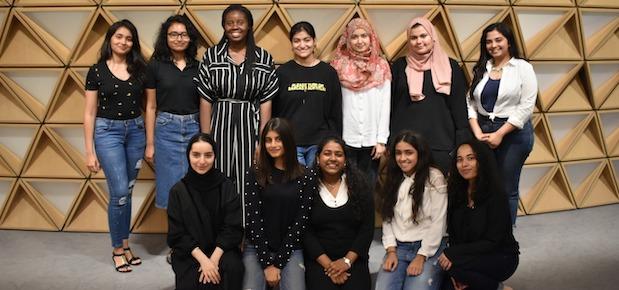
The Student Economics Association (SEA) works towards fostering a sense of community within those who are interested in taking up economics as their major or minor. We aim to provide learning opportunities that add to the experience of our students. To this aim, we organize seminars, visits, and competitions that enhance the economics students’ experience at AUS.
The SEA takes on projects such as the Big Sister/Brother Program, in which economics alumni are invited to provide support and advice for current economics majors and minors at AUS. The association also publishes the Economist Diwan, a student-run academic economics journal, with the support of the Department of Economics at AUS. Our objective is to publish research carried out by AUS students as well as exchange students and potentially extend our reach to publishing undergraduate research from other universities in the region as well. We also plan to create a Student Price Index (SPI), a measure for students to see how campus prices change over time, allowing them to understand such concepts as inflation and financial planning. Lastly, we intend to provide tutoring services for upper-level economics courses. We hope that this peer-to-peer interaction fosters productive discussions and thought, in addition to helping those students who need it.
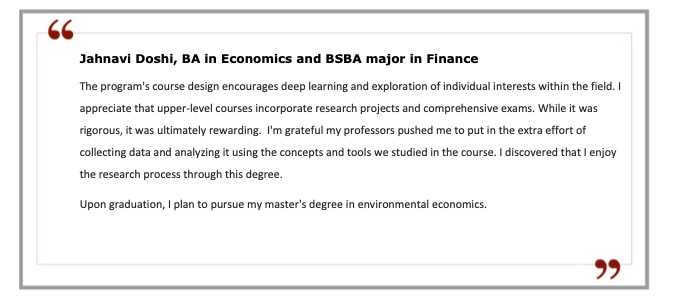
Hear from our Students and Alumni
Contact
For more information about our department or programs, please contact us:
Department of Economics
School of Business Administration
American University of Sharjah
PO Box 26666
Sharjah, UAE
Department Head
Dr. Samer Kherfi
Tel +971 6 515 2540
Fax +971 6 515 4065
[email protected]
Administrative Assistant
Alexa Largado
Tel +971 6 515 4658
Fax +971 6 515 4065
[email protected]
For admission information, please visit https://infodesk.aus.edu, sign up and post your query.