The AUS College of Arts and Sciences (CAS) is steadfast in its commitment to inspire the intellectual and creative potential of our students, advance knowledge through scholarly innovation, and find creative and impactful solutions to complex real-life problems through multidisciplinary, groundbreaking research. The College of Arts and Sciences is the most diverse at AUS, comprising 9 departments offering 15 bachelor’s, master’s and doctoral programs and 22 discipline-specific and interdisciplinary minors.
By providing students a comprehensive and transformative education in the liberal arts tradition, we nurture critical thinkers and creative problem solvers, instill the desire to innovate, and encourage global citizenry and lifelong career success. We continuously enhance our students’ educational experience by investing in the development of our instructional capabilities and infrastructure; supporting innovative pedagogy based on discovery and inquiry; engaging our students in collaborative faculty-student research projects, internships, student-run journals and agencies; and recruiting and hiring world-class faculty and researchers from the world’s top universities. These efforts reflect our commitment to providing students the opportunity to explore connections across the liberal arts disciplines through a robust and diverse curriculum of study in a variety of academic and experiential settings.
The college is deeply committed to the creation and dissemination of knowledge through research, scholarship and creative works. Our faculty members are actively engaged in diverse areas of research across the fields of natural sciences, mathematical sciences, and the humanities, arts, and social sciences, leading to technological, environmental and social insights and innovation in the UAE and the region. This diversity fosters rich research areas that include, but are not limited to, materials science, mathematical sciences, environmental and biological sciences, public and digital humanities, Middle East studies, critical media studies, literary studies and linguistics, and intercultural communication and international relations.
CAS’ rich resources and expertise have coalesced in the Materials Research Center (MRC), which serves as a nexus for interdisciplinary research and the transfer of cutting-edge technology to AUS, stimulating a unique knowledge environment. These endeavors will not only localize knowledge but also generate new knowledge that tackles critical challenges animating scientists and policymakers across the world. The collaborative endeavors within MRC, coupled with its robust international networks, promise substantial achievements.
The College of Arts and Sciences’ expansive research excellence and faculty expertise is highly recognized through endowed chairs and professorships in Gulf and Middle Eastern studies, international relations, education across disciplines and international studies. The academic excellence of our programs is recognized internationally and regionally. AUS is ranked first (tied) in the UAE by the QS world ranking in the category of arts and humanities and second in the UAE in the category of social sciences and management. In addition, AUS is ranked in the top five in the UAE in physical sciences by THE World Ranking.
Our work also extends beyond the boundaries of the college, benefiting from and giving back to the community outside of AUS. Our teaching responds to the input of potential employers of our students and grows out of the rich heritage and diverse culture that brings us together. We are, in turn, committed to offering services and professional assistance that allow businesses, government and social organizations in the Gulf region to benefit from the expertise and efforts of our faculty, staff and students. Alongside teaching excellence, multidisciplinary inquiry and scholarly innovation, contribution to the community is an essential component of our mission at CAS.
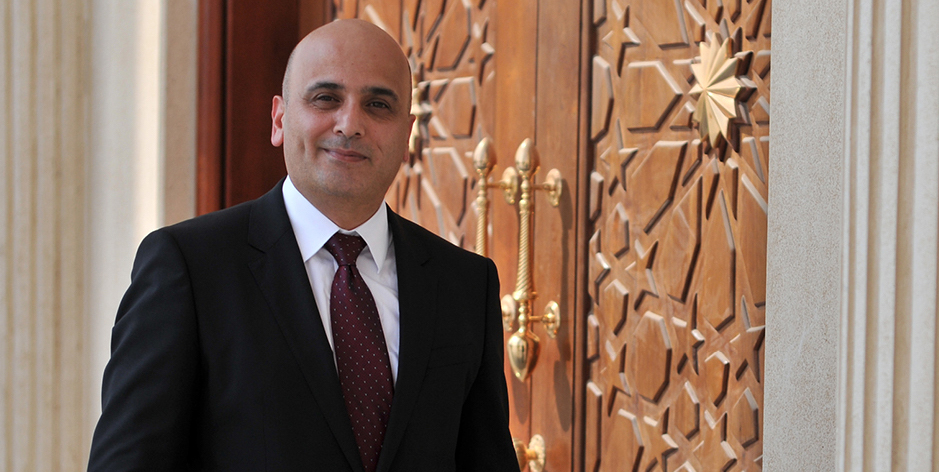
Mahmoud Anabtawi, PhD
Dean