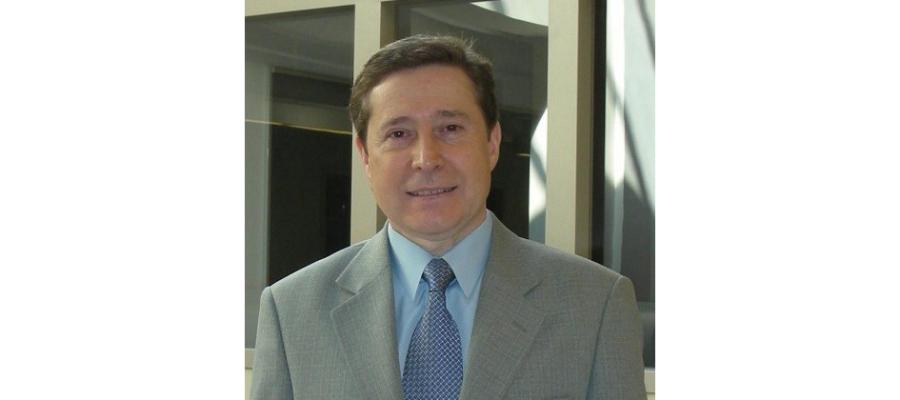
Seminar by Dr. Plamen Ch. Ivanov | The New Field of Network Physiology: From the Complex Dynamics of Individual Systems to Organ Network Interactions and the Human Physiolome (April 2026)
Seminar: The New Field of Network Physiology: From the Complex Dynamics of Individual Systems to Organ Network Interactions and the Human Physiolome
Professor Plamen Ch. Ivanov
Director, Keck Laboratory for Network Physiology
Physics Department, and Center for Systems Neuroscience, Boston University
Department of Neurosurgery, Boston University Chobanian & Avedisian School of Medicine
The human organism is an integrated network where complex physiological systems, each with its own regulatory mechanism, continuously interact to synchronize their dynamics and coordinate their functions.
Physiologic interactions occur at multiple levels and spatiotemporal scales, from the sub-cellular to the organism level, to produce distinct physiologic states: wake and sleep; light and deep sleep; rest and exercise; consciousness and unconsciousness. Disrupting organ communications can lead to dysfunction of individual systems or to the collapse of the entire organism (coma, multiple organ failure). Yet, we do not know the nature of interactions among organ systems and sub-systems, and their collective role as a network in maintaining health.
The multidisciplinary field of network physiology aims to address these fundamental questions. In addition to defining health and disease through structural, dynamical and regulatory changes in individual systems, the network physiology approach focuses on the interactions among diverse systems as a hallmark of physiologic state and function.
We will present complexity characteristics of individual organ systems, distinct forms of pairwise coupling between systems, and a new framework to identify and quantify dynamic networks of organ interactions. Through the prism of concepts and approaches originating in statistical and computational physics, applied mathematics, nonlinear dynamics, biomedical engineering and adaptive networks, we develop a physiologically motivated framework to map physiologic networks to graphical objects encoded with information about the coupling strength of network links.
Applying a system-wide integrative approach, we identify distinct patterns in the network structure of organ interactions, as well as the frequency bands through which these interactions are mediated.
We will demonstrate how physiologic network topology and systems connectivity lead to integrated global behaviors representative of distinct states and functions. We will also show that universal laws govern physiological networks at different levels of integration in the human body (brain-brain, brain-organ, and organ-organ), and that transitions across physiological states are associated with specific modules of hierarchical network reorganization.
We will outline implications for new theoretical developments, basic physiology and clinical medicine, novel platforms of integrated biomedical devices, robotics, and cyborg technology.
The presented investigations are initial steps in building a first atlas of dynamic interactions among organ systems and the human physiolome, a new kind of Big Data blueprint reference maps that uniquely represent physiologic states and functions under health and disease.
About the speaker
Plamen Ch. Ivanov, PhD, DSc, is the Director of the Keck Laboratory for Network Physiology, Research Professor in Physics, Systems in Neuroscience, and Neurosurgery at Boston University.
He has introduced innovative ways to analyze and model physiological systems, adapting and developing concepts and methods from modern statistical physics, nonlinear dynamics and network theory. He has investigated the complex dynamics and underlying control mechanisms of a range of physiological systems, including studies on cardiac and respiratory dynamics, sleep-stage transitions, circadian rhythms, locomotion and brain dynamics, and has uncovered basic laws of physiologic regulation.
Professor Ivanov has pioneered the study of dynamic network interactions of physiological and organ systems. He is the originator and founder of the multidisciplinary field of network physiology.
His current work focuses on developing methods of data analysis to investigate interactions among diverse organ systems and build a theoretical framework to understand how physiologic states and functions at the organism level emerge out of organ network interactions, and how diverse organ systems coordinate and integrate their functions to produce health or disease.
His discoveries have been broadly featured in the media, including Scientific American, Science News, New Scientist, Physics World and The Boston Globe.
Professor Ivanov is the Field Chief Editor of Frontiers in Network Physiology and Director of the International Summer Institute on Network Physiology (ISINP), Lake Como School of Advanced Study. He is a founding member of PhysioNet – the first US National NIH-sponsored data and algorithms research resource, and now a world-leading resource with millions of users.
His research has been funded by NIH, Office of Naval Research (ONR), and the W.M. Keck Foundation.
For his pioneering applications of statistical physics and nonlinear dynamics to physiology and biomedicine, Professor Ivanov was elected Fellow of the American Physical Society in 2010. He is the recipient of the Sustained Research Excellence Award of the Biomedical Research Institute, Brigham and Women’s Hospital, Harvard Medical School (2009–2011); the Georgi Nadjakov Medal of the Bulgarian Academy of Sciences (2012); the Pythagoras (Pitagor) Prize for high achievements in interdisciplinary research (2014); and the $1 million W.M. Keck Foundation National Award (2015).
For more information, please contact Noor Abdulmaati | [email protected].