Materials Research Center (MRC)
The Materials Research Center (MRC) is committed to advancing materials science through interdisciplinary research and education. Our goal is to establish MRC as a leader in advanced and sustainable materials research, fostering collaboration across disciplines to address current and future challenges in the field.
MRC aligns its research focus with the UAE Economic Vision 2030, concentrating on advanced materials research topics, including materials for energy and the environment, and analytical and computational materials modeling. The center also supports existing PhD programs, including the Materials Science and Engineering program.
Mission
MRC's mission is to advance materials science, providing innovative solutions and developing skilled individuals essential to the UAE's economic growth.
Objectives
MRC is dedicated to advancing its mission by actively catering to a comprehensive set of goals and objectives:
- Assemble and sustain a productive community of materials research scholars.
- Develop and maintain state-of-the-art infrastructure for materials research and education.
- Support collaborative projects on materials research by providing skilled personnel and continuous improvement of research resources.
- Provide novel solutions and develop highly skilled human resources that are critical to the UAE’s economic growth, particularly as it transitions from a petroleum-based economy to a diversified knowledge-based economy.
- Provide community and consultation services for governmental and industrial partners.
- Seek and nurture collaborations within and outside AUS by pursuing promising focused research themes.
- Promote the visibility and impact of the center to both internal and external stakeholders by organizing and participating in international workshops and conferences.
MRC Labs
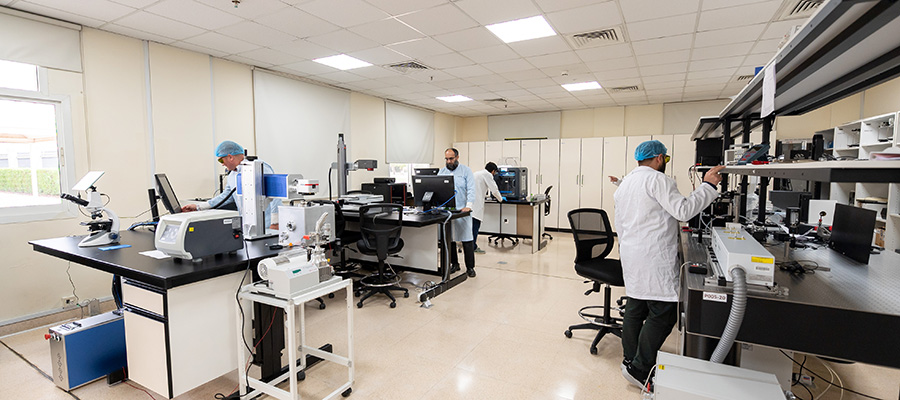
MRC is supported by a solid infrastructure of laboratories that facilitate our research. The key components of this support include:
- Fabrication Laboratories
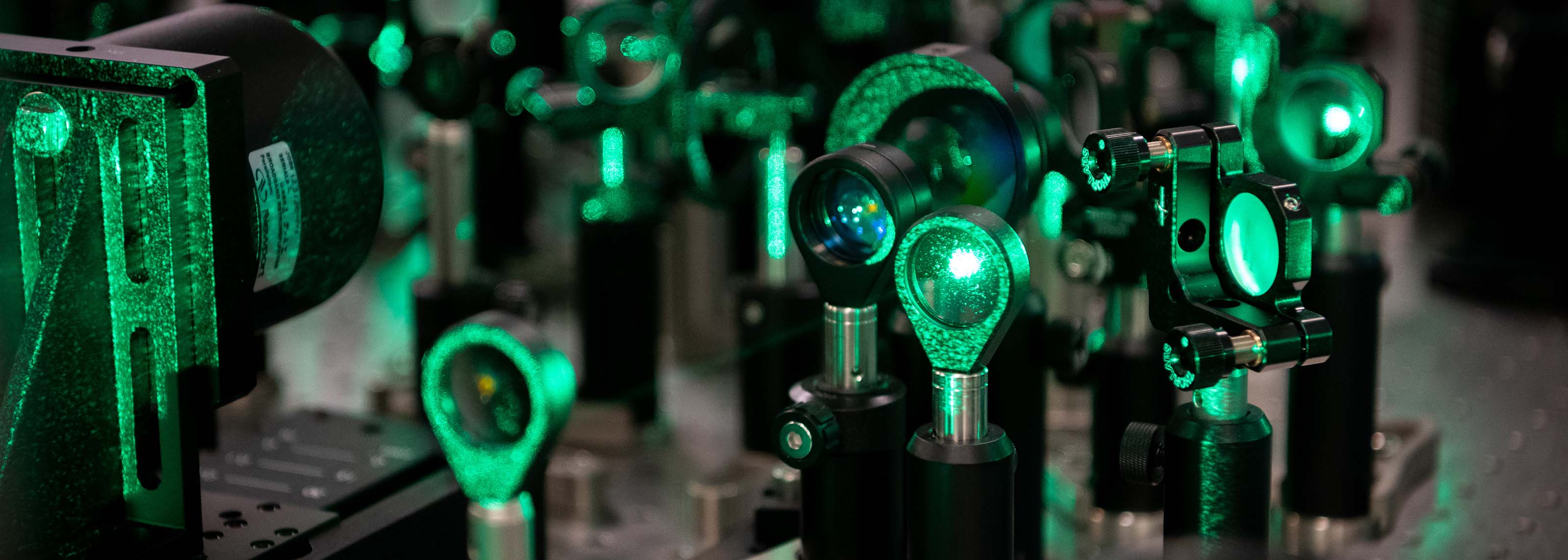
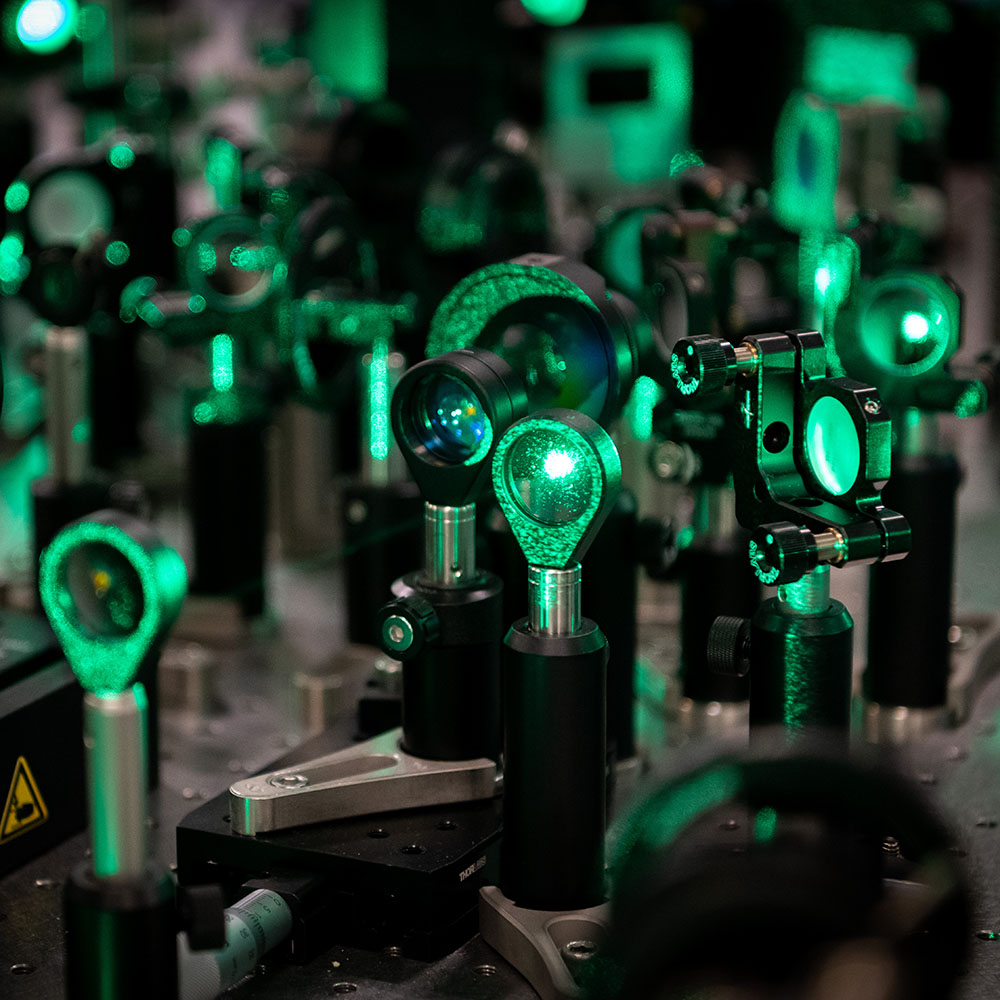
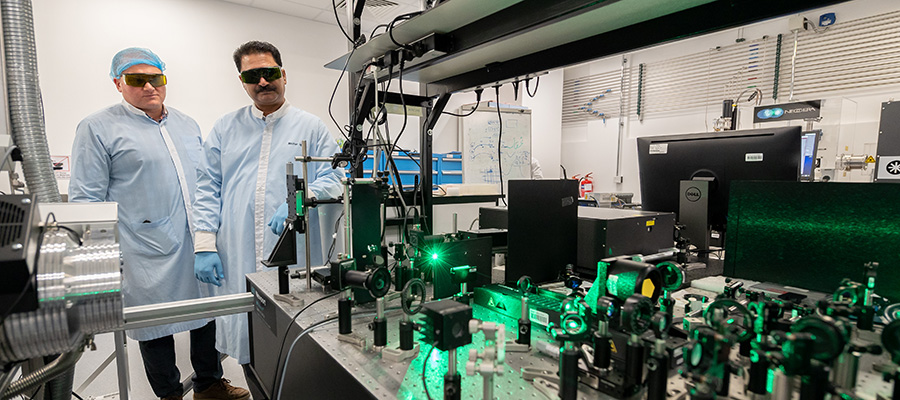
These labs house cutting-edge equipment such as high-power femtosecond multifunctional laser systems, pulsed laser deposition systems, nanosecond lasers, ultra-high vacuum chambers and more. They enable the synthesis of nanoparticles and quantum dots with tailored properties using femtosecond and nanosecond lasers. The labs also feature various furnaces, alloy fabrication equipment, metal 3D printer and deposition systems for producing ultrathin films and coatings.
- Materials Characterization Laboratories
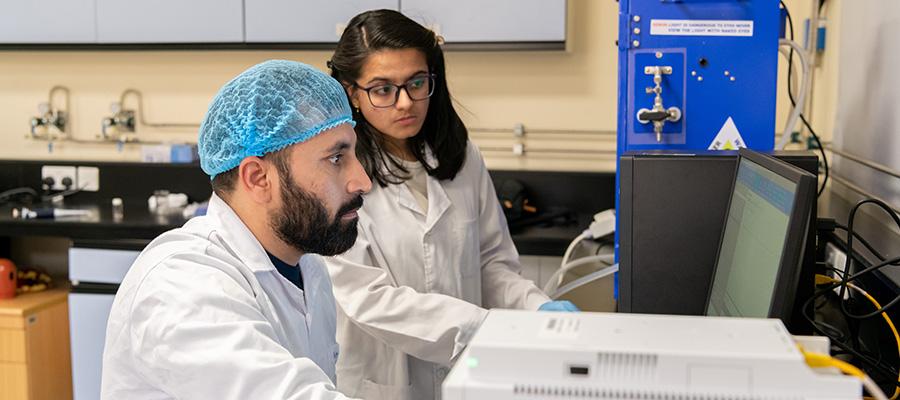
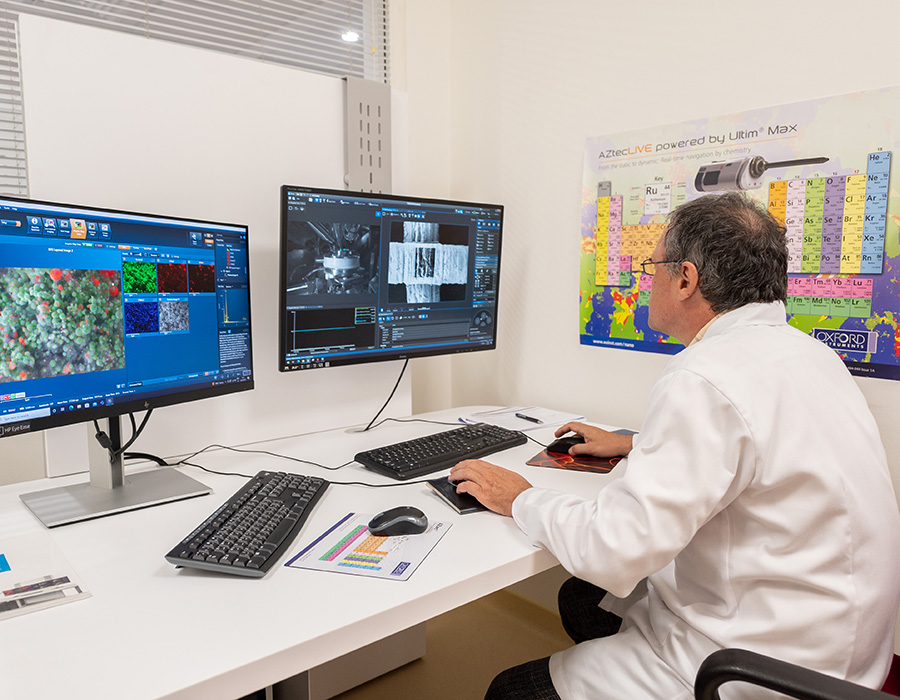
Equipped with state-of-the-art instruments, these labs facilitate research in energy, environment and nanoelectronics. Instruments include the Physical Property Measurement System (PPMS), UV-VIS-NIR Spectrometer, Raman Microscope, X-Ray Diffractometer, High-Resolution Scanning Electron Microscopes (SEM) and more. These tools allow researchers to analyze and test materials at microscopic and macroscopic levels.
- Analytical and Computational Materials Modelling Research Facility
This facility plays a crucial role in materials and structural research through computer workstations and specialized software. Modeling and data simulation tools like COMSOL, Atomistix toolkit, Nanohub, ANSYS, ABAQUS, Amsterdam Modeling Suite and Density Functional Theory (DFT) software packages (VASP, Quantum Espresso, WIEN2k) are utilized to accelerate product development and enhance understanding of materials and structures.
- Structures and Construction Laboratory
This laboratory focuses on destructive and non-destructive testing of construction materials. It provides facilities for testing structural components under static and cyclic loadings, covering beams, columns, slabs, trusses and their assemblies.
- Chemical Analysis and Synthesis Laboratories
These labs feature modern instruments for the synthesis and surface characterization of organic and inorganic compounds. Instruments include Fourier-Transform Infrared Spectroscopy (FTIR), UV- VIS and Atomic Absorption Spectrometers, Gas Chromatograph (GC), High-Performance Liquid Chromatography (HPLC) and more, supporting research in catalytic, environmental and energy applications.
To request support from MRC facilities, please submit this form.
Research Themes
The current specific research projects that stand to significantly benefit from funding MRC encompass the following focal areas:
- Ultrafast Laser Spectroscopy and Advanced Materials Processing
This area focuses on ultrafast laser spectroscopy and laser material processing to synthesize advanced materials and nanostructures. Applications include catalyst development for green hydrogen production, and CO2 reduction and capture, among many others.
- Functional Magnetic, Superconducting and Electronic Materials
This area aims to develop functional materials with magnetic, superconducting and electronic properties suitable for diverse applications.
- Metals, High/Medium Entropy Alloys and Shape-Memory Alloys
Research in this domain is centered around the development of metals, high/medium entropy alloys and shape-memory alloys, with applications spanning health care devices, aerospace, and civil engineering and infrastructure.
- Advanced Coating Techniques
This area seeks to advance coating techniques for corrosion protection, solar cell enhancements and sensor development, and more
- Functional Organic Polymers
Focusing on electrode/electrolyte interfaces, this research involves the development of functional organic polymers that can be utilized in energy and environment applications.
- Metal 3D Printing
Within this initiative, metal 3D printing is employed to craft structures applicable to both biomedical and aerospace sectors.
Contact