Latest News
October 22, 2026
October 21, 2026
October 20, 2026

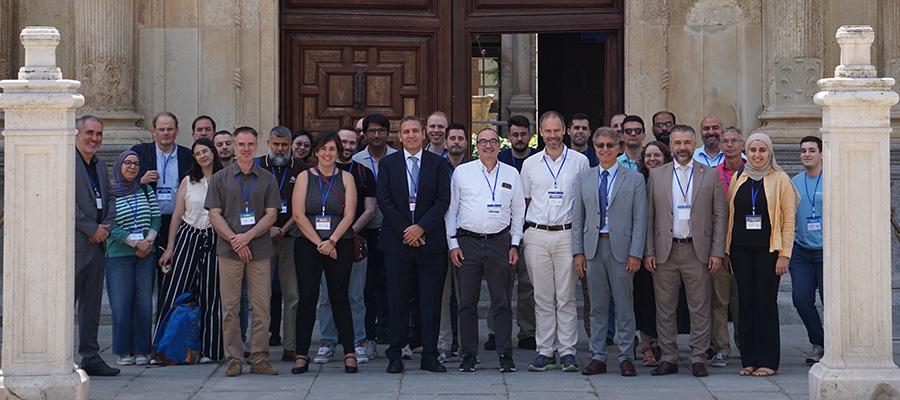
American University of Sharjah (AUS) sponsored and hosted the 7th International Conference on Communications, Signal Processing and their Applications (ICCSPA’26) held this month in Alcalá de Henares in Madrid, Spain. With more than 90 attendees from all over the world, including speakers, students and faculty from international universities, this was the first edition of the conference to be hosted in Europe. AUS has previously hosted earlier editions of the meet in the UAE in 2013, 2015, 2019 and 2021.
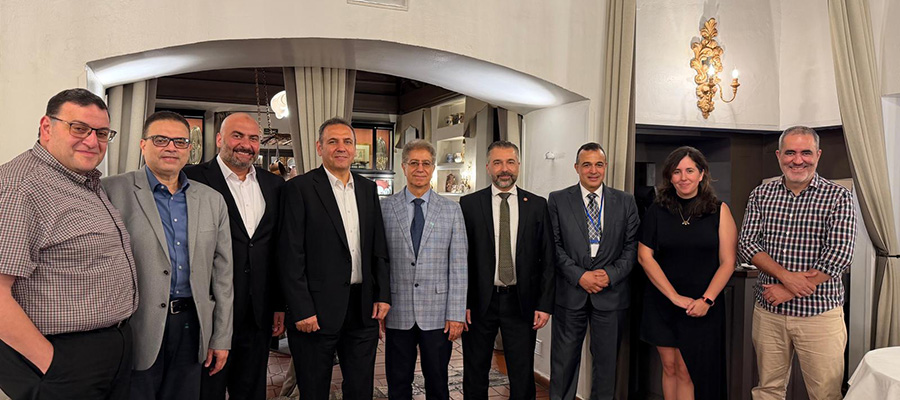
Dr. Mohamed El-Tarhuni, Professor of Electrical Engineering and Vice Provost for Graduate Studies, and Dr. Mohamed Hassan, Professor of Electrical Engineering, currently serve as members of the ICCSPA Steering Committee. For the 2026 edition, Dr. El-Tarhuni, as Advisory Chair, provided strategic guidance to position the conference on the European stage, while Dr. Hassan, serving as co-chair, led the selection of the Technical Program Committee chairs and members and oversaw the overall conference and associated operations.
Special recognition is accorded to Dr. Elisa Rojas, co-chair from the University of Alcala, Spain, the hosting university, for institutional leadership and support; Dr. Marwan Krunz, co-chair, for conference leadership, strategic direction and collaborative contributions; Dr. Marcelo Dias de Amoim, Dr. Michele Zorzi, and Dr. Dr. György Dán, technical co-chairs, for ensuring the technical excellence of the conference; and Dr. Alvaro Paricio, local arrangements chair, for successful event coordination and execution.
The program was marked by invited sessions featuring internationally renowned keynote speakers. These included Dr. Joerg Widmer, Research Professor and Research Director of IMDEA Networks; Dr. Andres Garcia-Saavedra, Principal Research Scientist at NEC Laboratories Europe; Miguel Santos, Chief Technology Officer at ASMOVIL/MASORANGE; and Rafael Cantó Palancar, Head of IP and Emergent Connectivity Technologies at Telefónica CTIO.
The conference placed a strategic focus on next-generation engineering, particularly highlighting critical advancements in AI, learning and optimization for wireless communications and networks; wireless communication theory, protocols and physical layer technologies; developments in sensing, positioning and navigation for wireless and networked systems as well as other emerging technologies and applications. These themes were explored through critical panel discussions, specialized industry talks and student poster sessions designed to bridge academic breakthroughs with practical enterprise applications.
The global call for papers at the conference received more than 110 research papers from 28 countries. Following a selective peer-review process, 67 papers were accepted for presentation. Highlighting AUS’ strong presence, eight AUS faculty members co-authored and presented six of the accepted papers alongside AUS graduate students, showcasing the university's active research pipeline.
"ICCSPA’26 has grown into a leading international platform for advancing research in communications, signal processing and emerging technologies," said Dr. El-Tarhuni. "Hosting the conference in Europe for the first time marks an important milestone and reflects its expanding global reach. We are especially proud of the strong contributions made by AUS faculty and graduate students, whose research demonstrates the university's commitment to innovation and international collaboration."
"At AUS, we believe global collaboration drives greater impact. Through strong international partnerships, we expand our research network, advance innovation and create solutions that address global challenges,” said Dr. Fadi Aloul, Dean of the AUS College of Engineering. “These collaborations enable us to translate fundamental research into high-impact, real-world solutions. Sponsoring ICCSPA’26 and seeing our faculty and graduate students actively present their advanced findings on a European stage reinforces AUS’ role as a driving force for regional and global technical innovation."
"Presenting my research at ICCSPA’26 was a proud and valuable experience," said Hamze Soueid, a student of Master of Science in Electrical Engineering, who presented his work, which focused on using advanced antenna arrays to improve wireless signal clarity and network efficiency, at the conference. "It gave me the opportunity to engage with researchers working in related areas while representing AUS on an international stage. The conference showed me how our work as graduate students can contribute to the field of communications and emerging technologies".
Speaking on the occasion, Dr. Krunz said, “The energy at ICCSPA 2026 in Madrid was remarkable. Advancing the frontiers of communications and signal processing requires a truly global perspective and this conference undeniably delivered on that front. I'm incredibly proud of the caliber of work showcased this year and immensely grateful for the strong international partnerships, particularly with American University of Sharjah, that made it all possible.”
Through its sustained sponsorship of ICCSPA’26, AUS has reinforced its position as a vital regional and international benchmark for high-impact innovation and technical research. Notable papers presented by AUS students included research on urban smart systems, advances in autonomous navigation, work on quantum-secure 6G networks and a proposed deep learning model for malaria diagnosis, amongst others.
To learn more about ICCSPA ‘26, please visit https://2026.iccspa.org/.
To learn more about CEN, visit www.aus.edu/cen.

By continuing, you will be taken to a website not affiliated with American University of Sharjah. Links to external sites are provided only for users' convenience and imply no endorsement of the site and/or its content. Note that the privacy policy and security settings of the linked site may differ from those of the AUS website.