Latest News
October 19, 2026
October 15, 2026
October 13, 2026
October 13, 2026

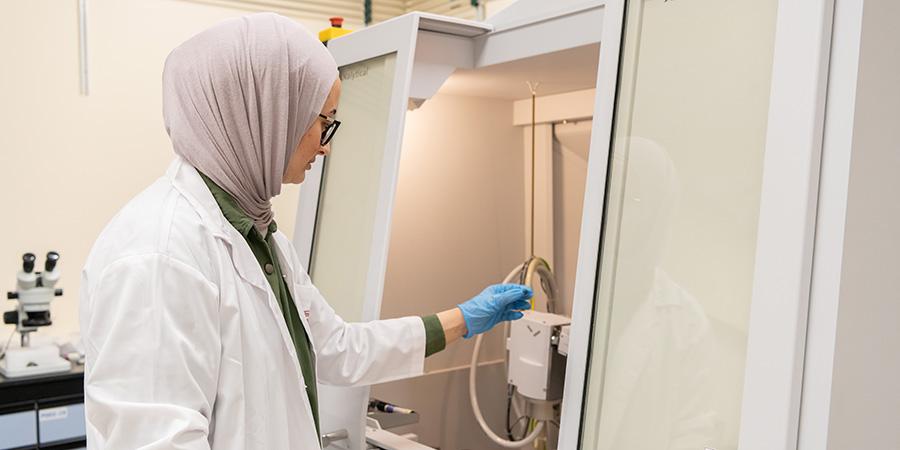
At American University of Sharjah (AUS), research is not just a buzzword, it is the university’s core strategic pillar, aiming to position AUS as a “forward-looking producer of research and creative work defined by rigor, influence and relevance.” To enable a robust research environment, the university has provided, and continues to provide, a state-of-the-art, high-end research instrumentation infrastructure that makes advanced research possible.
These core research facilities support diverse academic families, but they carry a heavy economic and logistics burden. Equipment like high-end electron microscopes, ultra low-temperature X-ray diffractometers and complex spectrometers face massive operational demands, balancing intense scheduling with heavy maintenance requirements and equipment calibration cycles. From maintenance contracts, dedicated operators and specialized software licensing to consumables like gases, high-vacuum components and mechanical parts, the cost base of keeping multi-million dollar machinery alive scales rapidly with use. Yet, these operational realities are rarely visible to the researchers peering through the lenses or analyzing the diffraction spectra.
Institutions such as Princeton, UC Berkeley and Arizona State University share core facilities by relying on traditional recharge models where instruments charge direct financial rates against external grants or departmental budgets. Translating this to AUS’ and the region’s research-funding environment would require internal movement of allocated funds, causing such resources to circulate within various departments resulting in decreased administrative efficiency and unnecessary overheads.
To bridge this research-resource visibility gap and for immediate resource accountability across the ecosystem, the Office of Research has introduced a non-monetary, tokenized credit system, initially deployed at the Materials Research Center (MRC). Implemented by a team led by Dr. Ali Alnaser, Associate Vice Chancellor for Research Infrastructure and Professor of Physics at the College of Arts and Sciences (CAS), and Dr. Mehmet Egilmez, Director of the MRC and Professor of Physics at CAS, this internal currency for lab equipment replaces arbitrary, and often opaque, scheduling with a data-driven framework that optimizes resource distribution and accelerates the scientific throughput of the research center.
By standardizing a fixed credit value based on real-world equipment costs, the credit system determines hourly credits required for researchers to use a specific resource. This mimics market-based pricing mechanisms without creating a direct financial burden for internal academic users, as baseline credits are automatically allocated for each registered user. By replacing internal financial transactions with a transparent resource allocation mechanism, the system allows researchers greater flexibility in accessing shared facilities while bringing consistency and transparency to lab bookings, equipment downtime tracking, resource status updates and budgetary usage across the entire lab.
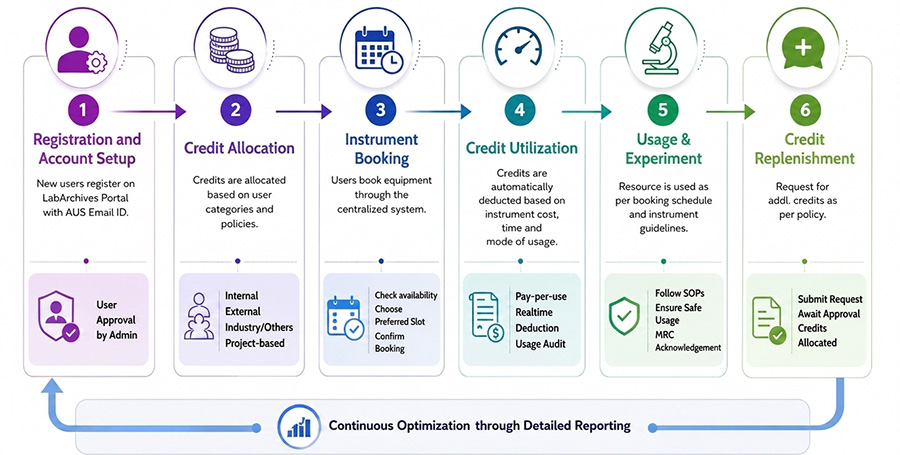
Beyond behavioral changes, the tokenization framework’s digital tracking layer is integrated with LabArchives, a software-as-a-service (SaaS) application platform used by institutions such as MIT, University of Oxford and Stockholm University, amongst others. This integration generates a verifiable utilization trail along with equipment usage rates, active demand curves, resource lifecycle details and downtime data. For researchers, this translates into a vastly improved daily experience, eliminating scheduling guesswork with a live view of instrument availability. For research leadership, it provides clear, data-backed insights into where research demand is concentrated, allowing the university to strategically direct future capital investments to expand high-impact facilities, manage under-utilized machinery, predict downtime and overload cycles, streamline consumable usage and maximize the institutional return on investment on these multi-million dollar machines.
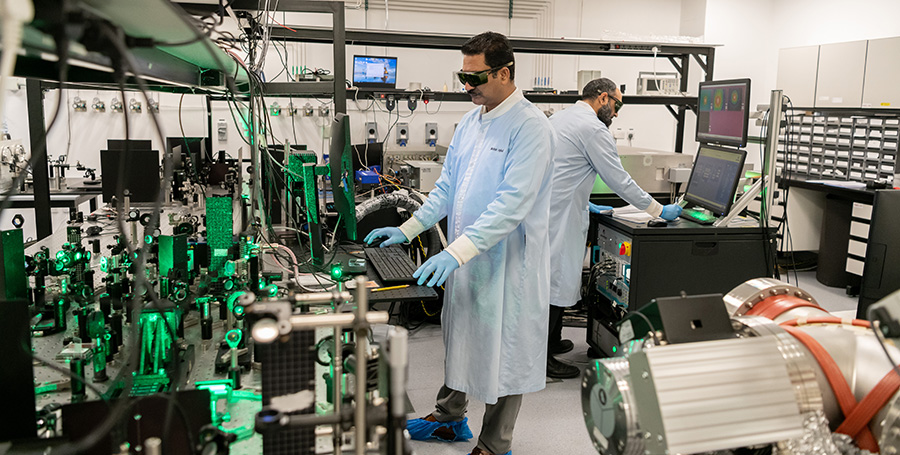
Completing its six-month pilot program on June 1, 2026, the credit system has already proven its viability. “One of the most significant benefits has been the centralization of equipment access and resource management,” explained Dr. Egilmez. “Together with the centralized LabArchives booking platform, the credit system has significantly improved equipment scheduling, reduced booking conflicts, increased transparency in resource allocation and provided comprehensive utilization data that now supports evidence-based decisions regarding equipment maintenance, staffing requirements, future infrastructure investments and research planning. The system has also introduced a fair and consistent mechanism for providing all researchers with equitable access to advanced scientific facilities regardless of their department.”
The Office of Research is looking ahead to scale this credit-based architecture across all research laboratories in the University. It also paves the way for secure external monetization, applying industry standard credit purchase and equipment usage for external academic collaborators and industrial partners.
“The credit system enables us to track utilization and extract the greatest possible value from our advanced equipment, optimize the resources we have and manage our facilities in a structured way that supports their long-term self-sustainability,” said Dr. Alnaser. “Just as importantly, it gives us a clear, evidence-based foundation for budget planning, ensuring that our spending is focused where it drives growth and ultimately provides more resources and more tools for our researchers .”
This system, more so than being a tool for tracking equipment usage, signifies a comprehensive evolution in how AUS manages its research infrastructure. When integrated with standardized operational procedures, the centralized booking system, the MRC Research Infrastructure Grant Program and robust governance policies, it establishes a transparent, fair and sustainable framework for advanced research facilities. Collectively, these efforts elevate the Materials Research Center to the standard of leading global university core facilities operating under international best practices for shared research resource management.
By replacing informal administrative pathways with a standardized, universal credit protocol, AUS does something far more valuable than simply saving money: it sustains, protects and accelerates the future of innovation.
To learn more about the MRC, please visit www.aus.edu/materials-research-center-mrc.
To learn more about research at AUS, please visit www.aus.edu/research.

By continuing, you will be taken to a website not affiliated with American University of Sharjah. Links to external sites are provided only for users' convenience and imply no endorsement of the site and/or its content. Note that the privacy policy and security settings of the linked site may differ from those of the AUS website.