Latest News
October 28, 2026
October 28, 2026
October 27, 2026
October 27, 2026

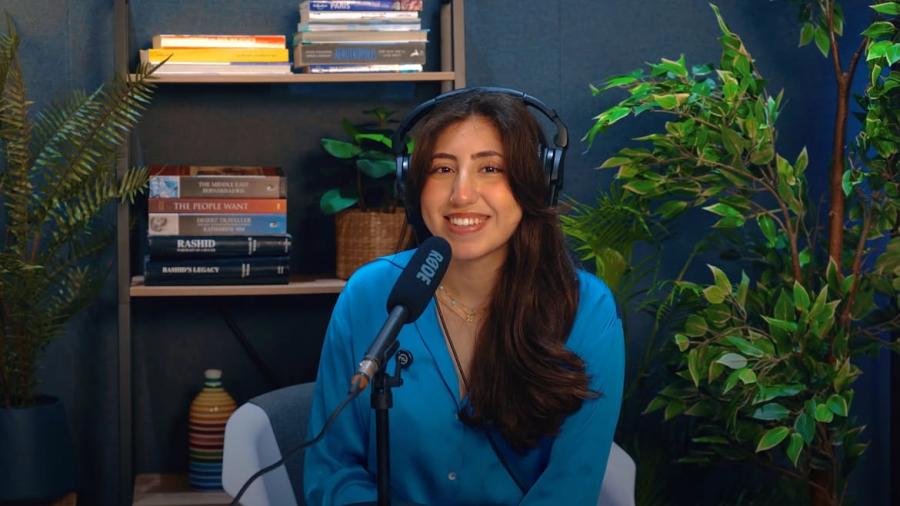
When Hala Nasar graduated from American University of Sharjah (AUS) with a degree in mass communication, she carried with her a deep-seated commitment to telling stories based on social truths with a target of amplifying voices that often go unheard. Today, as a social media journalist at The National newspaper in Abu Dhabi, Hala is using her platform to transform how young adults across the region navigate life and work with mental and physical wellness.
Hala’s work has earned her international recognition; she has been awarded The Carter Center’s prestigious Rosalynn Carter Fellowship for Mental Health Journalism in the UAE for 2026-2027. As a part of a select pool of nine USA-based and two international journalists chosen for this year-long fellowship, Hala will use the opportunity to produce a dedicated season of her popular video podcast series, How to Adult, focusing entirely on mental health awareness.
Honest Conversations at "How to Adult": Born out of a newsroom brainstorming session at The National, How to Adult was created through honest conversations with listeners and peers with an aim to bridge the gap between young adults entering the workforce and the practical life skills rarely taught in classrooms.
"I realized through those early discussions that I often felt like everyone around me knew what they were doing and I was alone in my struggle, which, of course, was the furthest thing from the truth," Hala recalled. "The truth is, everybody needs support. Adulting is really hard, and nobody has all the answers, and that is okay."
In its inaugural season, How to Adult tackled everything from personal budgeting and house-hunting to physical health and networking. Supported by The Carter Center's fellowship, Season Two will be presented as a video podcast featuring roundtable discussions designed specifically for young adults across the UAE and the wider Arab world.
Guided by subject matter experts, advisors, psychologists and veteran journalists, this upcoming season will address critical topics relevant to mental health in the region, including navigating social norms, addressing family dynamics, working through cultural stigma and connecting local audiences with safe mental health communities and resources in the UAE.
Set to begin production shortly, Season Two will air across all major podcast platforms and on YouTube via The National's official channels.
The AUS Foundation: A 2024 mass communications graduate, Hala Nasar credits her years at AUS as pivotal in shaping her career. Honing her journalistic skills and building her on-camera confidence within the College of Arts and Sciences (CAS), Hala credits her passion for storytelling to dedicated faculty members who encouraged intellectual curiosity and rigorous research.
It was on the AUS campus that Hala first discovered her love for audio production and public engagement, hosting the official AUS Silver Jubilee Podcast and participating in the regional Qasetna Podcast project. Her active participation in the university's Performing Arts Program provided an additional layer of personal development, fostering the public-speaking confidence that now defines her presence as a video podcast host.
"I will never take for granted the time I spent at AUS or the people I met there," Hala reflected. "My love for journalism was nurtured and multiplied in the classrooms with professors who listened to me and helped me cultivate my ideas. I would especially like to thank Dr. Joseph Gibbs, Dr. Hania Nashef, Professor Isabela Tavares, Dr. Albert Agha and Dr. Sohail Dahdal for the profound impact they had on my journey."
Hala is the third AUS graduate to be awarded the fellowship, with previous awards in 2020 and 2023.
Looking Ahead: As a Rosalynn Carter Fellow, Hala joins an international cohort of journalists dedicated to elevating public understanding of mental health conditions. At the conclusion of her fellowship year, she will present her completed season to a global panel of advisory board members, psychologists and media peers at The Carter Center in Atlanta, Georgia, in the USA.
Hala’s achievement underscores AUS' broader mission of providing an interdisciplinary education that equips graduates not only with professional skills, but also with the empathy, analytical rigor and civic responsibility required to drive meaningful societal impact.
"I love the process of finding stories and telling them in a creative manner, so I will always be a journalist at heart," said Hala. "I look forward to contributing more to the mental health and culture space in the UAE, always aiming to produce work that makes a real difference.”
"The ultimate goal is to get people to think about mental health the way they do about physical health: if somebody has an ailment, they go to a doctor to recover. Normalizing these hard conversations is important for positive change. We all need a little help, and it’s a good skill to learn to accept this help while also providing support for somebody else who needs it.”
About the Carter Center: The Carter Center, a US-based not-for-profit, non-governmental organization, has awarded annual fellowships to more than 200 journalists around the world since 1996. The fellowship is named after Rosalynn Carter, co-founder of the Carter Center, an influential voice in the field of mental health for decades.
By continuing, you will be taken to a website not affiliated with American University of Sharjah. Links to external sites are provided only for users' convenience and imply no endorsement of the site and/or its content. Note that the privacy policy and security settings of the linked site may differ from those of the AUS website.