Latest News
November 19, 2026
November 18, 2026
November 18, 2026
November 17, 2026

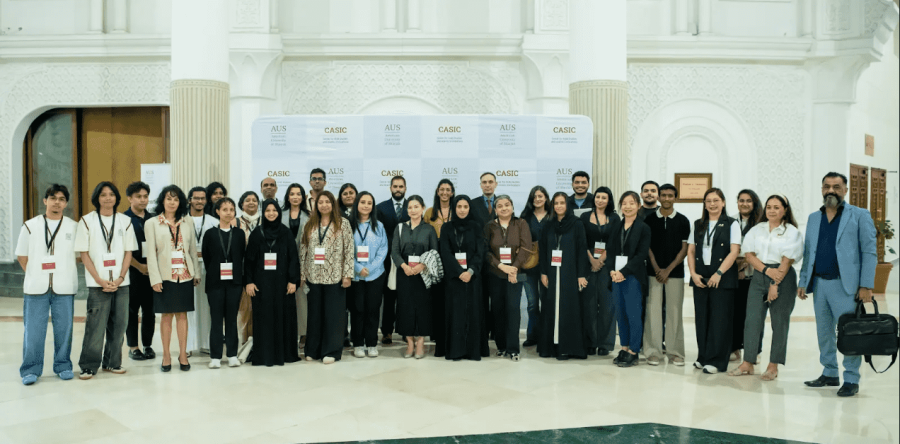
American University of Sharjah’s (AUS) Center for Arab Studies and Islamic Civilizations (CASIC) recently convened leading academics, researchers and students for two milestone scholarly gatherings: the MENA Diasporas: Migration, Identity, and Belonging workshop and the Translation Today: Texts, Media, and Emerging Perspectives symposium. Featuring dynamic discussions on diaspora temporality and examinations of human-AI collaboration in translation, these events brought together experts from premier international and regional institutions, highlighting AUS’ commitment to advancing rigorous humanities and social sciences research anchored directly within the GCC region.
MENA Diasporas: Migration, Identity and Belonging
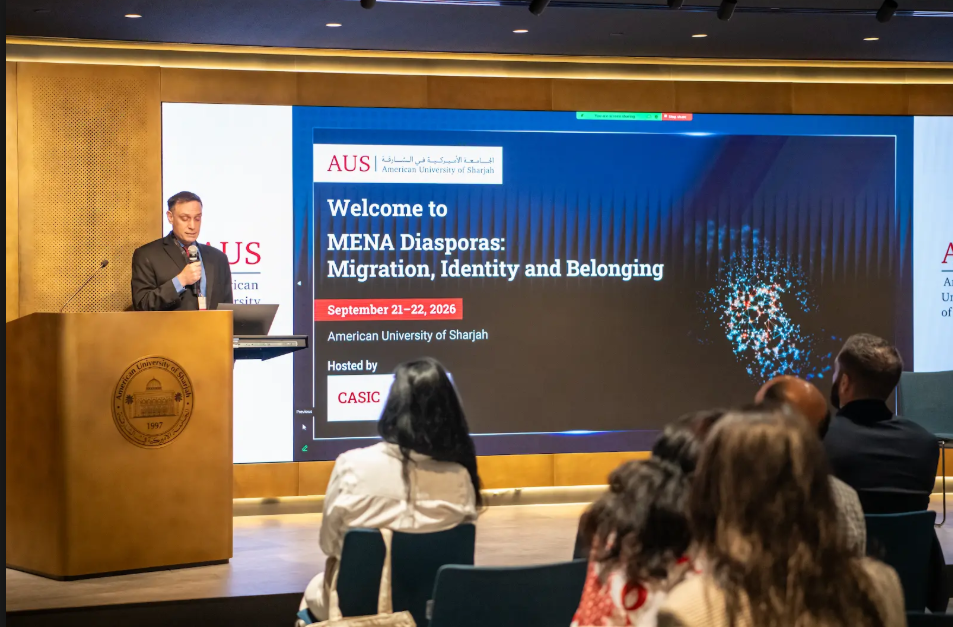
The MENA Diasporas workshop brought together academics and researchers from international and regional universities including the University of London, the University of Exeter, the University of California, New York University Abu Dhabi, the University of Exeter, Brandeis University, University of Las Hespérides, the University of Turin and the Arab Center for Research & Policy Studies at the Doha Institute for Graduate Studies, alongside AUS faculty and students.
Discussing the core academic objectives and the significance of hosting such discussions from within the region, Dr. Neha Vora, Professor of International Studies at CAS and a member of the organizing committee, noted:
“The MENA region, and especially the GCC countries, have large immigrant populations, who have shaped what it means to be Arab and Islamic for centuries, yet are often marginalized when we discuss the cultures and societies of MENA countries. One of the intellectual goals of this conference was to highlight the cosmopolitanism of the region, both historically and now. ”
Across diverse paper sessions, ranging from maritime trade histories and transnational labor politics to digital homemaking and South Asian mobilities, a unifying theme emerged that belonging in the MENA diaspora is experienced through time just as much as through place. Participants kept returning to the rhythms of waiting, staying, returning and remembering. This cross-institutional discussion inspired further collaboration, including a planned roundtable proposal for the International Journal of Middle East Studies (IJMES) under the working title “Temporalities of Belonging: Waiting, Staying, Returning” and “Remembering in/out of the MENA,” alongside a second special journal issue currently in development.
The workshop also featured the UAE premiere screening of Revolution From Afar by Dr. Bentley Brown, Assistant Professor of Media Communication at the AUS College of Arts and Sciences (CAS). His film offered participants and attending students an artistic lens into diaspora and belonging beyond the traditional workshop sessions, sparking a vibrant discussion on the topic.
Translation Today: Texts, Media and Emerging Perspectives
The Translation Today: Texts, Media, and Emerging Perspectives symposium addressed evolving paradigms in professional translation, technological disruptions and stylistic accuracy across languages. Organized jointly by the Department of Arabic and Translation Studies (ATS) and CASIC, the event brought together linguists, literary translators and media scholars.
Sessions throughout the day tackled complex frontiers in the field, including translation in an age of AI, translator style profiling through computational tools, immersive subtitle reception and the delicate boundaries of cultural mediation in classical Arabic texts. A central takeaway for researchers and students was that while artificial intelligence can accelerate translation workflows, human judgment, stylistic nuance, and cultural fluency remain irreplaceable.
The symposium underscored the robust resources available at AUS, including specialized translation courses and the university’s UNESCO Chair in Arabic Language, Artificial Intelligence and Digital Heritage, which equip students and professionals to navigate the future of the translation profession with the required adaptability and finesse.
CASIC as an interdisciplinary catalyst
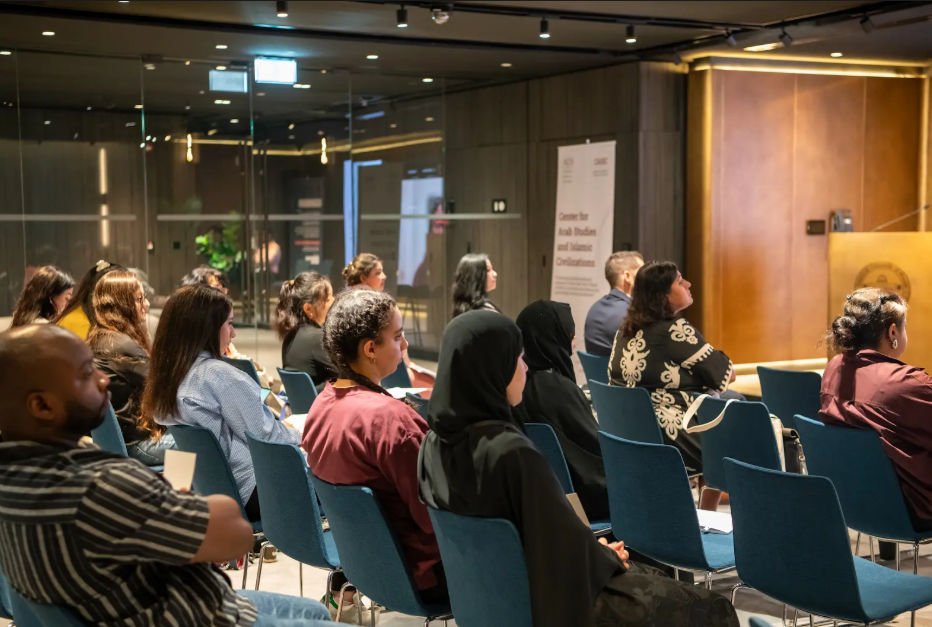
Reflecting on CASIC's expanding academic footprint and future outlook, Dr. Sammy Badran, Associate Professor of International Studies at CAS and Interim Director of CASIC, highlighted how the center serves as an intellectual anchor for Arab and Islamic studies:
“The MENA Diasporas workshop and the Translation Today symposium reflect CASIC’s aim of becoming a leading, regionally grounded, interdisciplinary center that advances scholarship and research in the humanities and social sciences. Together, these events demonstrate how CASIC brings together disciplines and scholars from across the region and beyond in a shared intellectual conversation. CASIC looks forward to hosting further events of this kind as the Center continues to grow.”
CASIC’s next conference is Crossing Boundaries: New Conversations and Intersections in Arabic Literary and Cultural Studies, scheduled for November 26 and 27, 2026, at AUS. The center will also host future events through its small-grants program and ongoing talk series that pairs AUS faculty with invited international scholars.
To learn more about CASIC, please visit www.aus.edu/research-center-casic. (LinkedIn)
To learn more about the Department of Arabic and Translation Studies, please visit www.aus.edu/cas/department-of-arabic-and-translation-studies.
By continuing, you will be taken to a website not affiliated with American University of Sharjah. Links to external sites are provided only for users' convenience and imply no endorsement of the site and/or its content. Note that the privacy policy and security settings of the linked site may differ from those of the AUS website.