Latest News
November 25, 2026
November 25, 2026
November 24, 2026
November 24, 2026

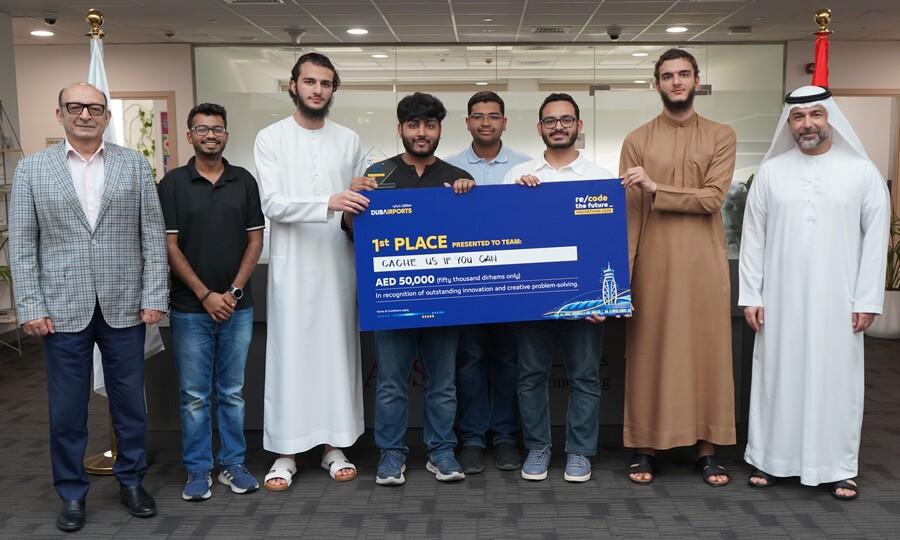
BASIRA combines flight, equipment and maintenance information to help DXB teams identify problems early and respond before they affect passengers
When a lift, an escalator or a moving walkway breaks down at an airport, operations could be disrupted and passenger movement could be affected. Passenger movement is disrupted, and those with mobility issues may not be able to reach their gates. Recognizing how equipment failures can affect passengers and airport operations, five senior students from American University of Sharjah (AUS) saw an opportunity to help airport teams act sooner when equipment fails, or even prevent failures from occurring. Their idea became BASIRA, a platform designed to help Dubai International Airport (DXB) identify equipment problems early and plan its response.
The team won first place at the Dubai Airports Hackathon and received an AED 50,000 prize. The event took place from November 13 to 15, 2026, at the Launchpad near the airport. Participants were invited to develop practical solutions to operational challenges at DXB.
The winning AUS team, Cache Us If You Can, comprises team leader Rizwanul Abidin Asim and Fadil Imran Pasha, fourth-year computer engineering students, and Pranav Rajesh, Hasan Akel and Salim Akel, fourth-year computer science students.
“We wanted to address what happens when an airport asset fails and airport teams do not have the full picture until the impact is already being felt,” said Asim. “BASIRA is designed to bring that information together early, so teams can make informed decisions before a flight arrives.”
The team chose the hackathon’s Intelligent Asset Management challenge. BASIRA gives airport staff essential information on live flight arrivals and departures, equipment condition, maintenance records and work permits for lifts, escalators, moving walkways and cooling units. For each gate, it shows operators which equipment is out of service, how many passengers the gate can currently handle and what alternatives may be available, such as moving a flight to a working gate or arranging staff assistance. The platform can alert teams before a flight arrives, giving them time to respond.
“Airport operations depend on many connected pieces of information,” said Pasha. “We wanted to make it easier to see how equipment status, maintenance work and flight schedules relate to one another, and what options are available when something is out of service.”
BASIRA is also designed to help teams plan beyond immediate disruptions. Its predictive maintenance feature estimates which equipment may be at risk of failure, allowing teams to plan repairs or replacements in advance. The platform’s 3D digital twin shows equipment around each gate and the components inside it, helping maintenance teams identify which component has failed. A dashboard brings key performance indicators for airport operations into one view.
“Predictive maintenance can help teams look ahead and plan their work before a failure happens,” said Rajesh. “That gives them a chance to consider repairs or replacements in advance, instead of responding only after equipment has stopped working.”
“The digital twin helps make the equipment easier to understand in context,” said Hasan Akel. “Teams can see what is around a gate and look at the components inside a piece of equipment, which can help them identify where a problem may be.”
The judges assessed submissions on innovation, creativity, scalability, potential impact, understanding of the problem, use of the data provided and how well each solution worked. They highlighted BASIRA’s holistic approach, the team’s understanding of the challenge and its digital twin.
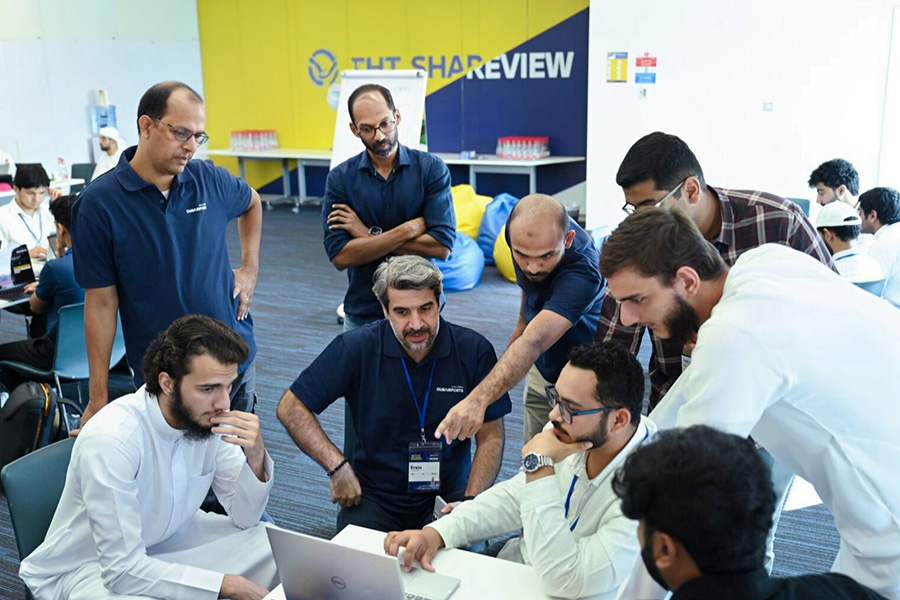
The students also credited Ali Reza Sajun, Laboratory Instructor in the AUS Department of Computer Science and Engineering, with helping them take part in the opportunity and supporting them during the competition.
“We are grateful to Sajun for helping us take part and guiding us through the competition,” said Asim. “His support helped us bring our ideas together and present BASIRA as a solution to an operational challenge.”
“Winning is an important first step. Our next goal is to help turn the platform into something that supports airport operations and, ultimately, the passengers who rely on this equipment,” said Salim Akel.
The Department of Computer Science and Engineering at AUS offers bachelor’s degrees in computer science and computer engineering, master’s programs in computer engineering and machine learning, minors in both fields, and a PhD in electrical and computer engineering. Its curriculum spans artificial intelligence, data science and smart cities, while hands-on labs and industry-sponsored graduation projects help students turn what they learn into practical solutions. AUS is ranked among the top five universities in the UAE and the top 400 globally for computer science and information systems in the 2026 QS World University Rankings by Subject. Click here to learn more about the department and its offerings.
By continuing, you will be taken to a website not affiliated with American University of Sharjah. Links to external sites are provided only for users' convenience and imply no endorsement of the site and/or its content. Note that the privacy policy and security settings of the linked site may differ from those of the AUS website.