Latest News
November 26, 2026
November 25, 2026
November 25, 2026

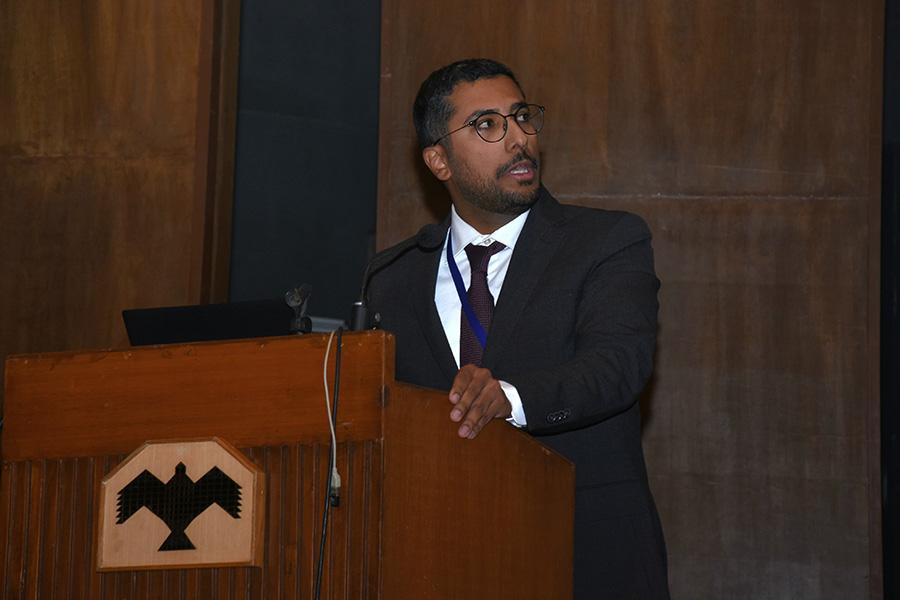
Dr. Mohamed Al Hajri, Assistant Professor of Computer Science and Engineering at the American University of Sharjah (AUS), represented the UAE at the 11th BRICS Young Scientist Forum, held in Bengaluru, India, from November 16 to 20, 2026. At the forum, Dr. Al Hajri presented his research under the theme “Science in an Age of Synthetic Reality” and took part in scientific discussions with researchers from BRICS countries, which include Brazil, Russia, India, China and South Africa.
His presentation, “From Synthetic Reality to Real-World Intelligence: Learning and Optimization under Tight Resource Constraints,” explored how synthetic data, learning algorithms and efficient inference can enable AI systems to operate under tight constraints on computing power, memory and energy. Using desert search and rescue as an example, he explained the challenges of obtaining sufficient training data, meeting AI models’ computational demands and running them on devices with limited resources.
Dr. Al Hajri introduced Shaheen, a student research project he supervised at AUS to detect people in desert environments. In May 2025, Shaheen won first place in the AUS Department of Computer Science and Engineering’s Computer Engineering Senior Design Projects competition for the 2024–2025 academic year. It also placed second in Dell Technologies’ Envision the Future competition, which featured 259 projects from 14 countries. A patent application has been filed for the platform.
To support Shaheen’s detection capabilities, the team combined more than 7,500 real images with over 90,000 synthetic images. Beyond Shaheen, Dr. Al Hajri discussed Priority-Constrained Descent, a method that enables model compression while prioritizing accuracy, and mixed-precision quantization, which reduces memory and computational requirements by representing numbers with fewer bits. Together, these approaches can help bring AI from powerful laboratory computers to smaller devices with limited energy and computing capacity.
“The value of a synthetic world is measured by what it helps us achieve in the real one,” said Dr. Al Hajri. “The usefulness of AI depends on more than its accuracy in a laboratory. A search-and-rescue drone, for example, must detect people quickly while operating with limited power and connectivity.”
The same focus on AI for public safety extends to ORCA: A Real-Time Computer Vision-Assisted Drowning Detection and Alert System, a student project Dr. Al Hajri supervised at AUS that uses computer vision to detect potential drowning incidents and issue real-time alerts. ORCA won first place in the Computer Engineering program’s 2026 Senior Design Competition at AUS and provided the foundation for Amana Vision, a spin-off company he co-founded with his students
Dr. Al Hajri’s research focuses on machine learning optimization, efficient AI and intelligent sensing. He develops methods to improve how models learn and operate within constraints on computation, memory, energy and communication. This work can support applications in public safety, environmental monitoring and communications.
“My broader goal is to connect advances in learning algorithms with systems that deliver measurable benefits outside the laboratory,” he said.
His research record includes more than 25 peer-reviewed journal and conference papers, with collaborations spanning nine countries.HHe earned his PhD and master’s degrees in electrical engineering and computer science from the Massachusetts Institute of Technology (MIT) in 2023 and 2018, respectively, and his bachelor’s degree in electrical engineering from Khalifa University in 2015.
“Representing the UAE was both an honor and a responsibility,” he said. “Sharing our research internationally is one way of giving back and contributing to the UAE’s scientific ambitions. It was particularly meaningful to represent work developed alongside my students and collaborators.”
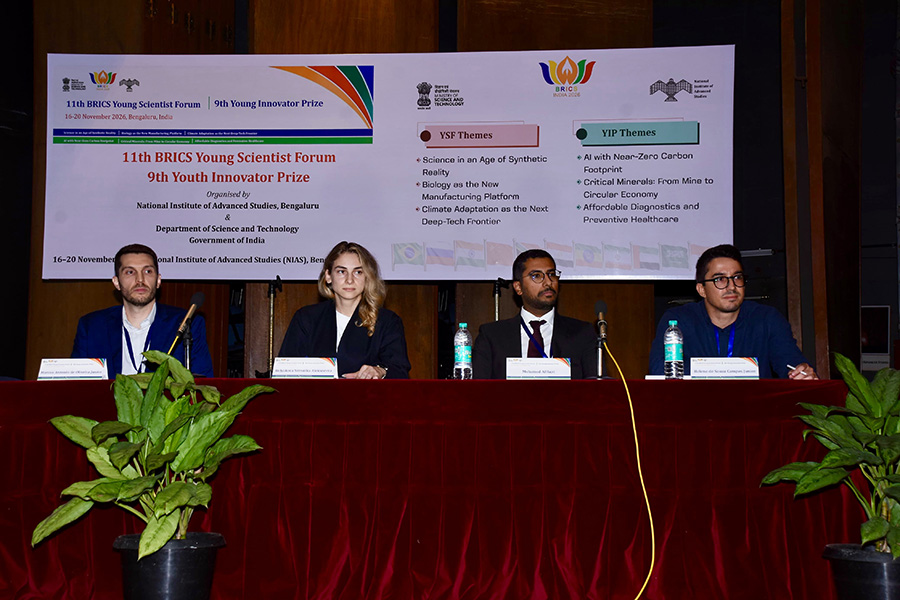
Dr. Al Hajri’s presentation is one of many examples of AUS faculty taking their research to international forums, sharing their work with global scientific communities and building opportunities for collaboration. Across disciplines, AUS faculty advance knowledge and develop ideas and technologies with practical value for society. To learn more about AUS faculty and their backgrounds, visit www.aus.edu.
By continuing, you will be taken to a website not affiliated with American University of Sharjah. Links to external sites are provided only for users' convenience and imply no endorsement of the site and/or its content. Note that the privacy policy and security settings of the linked site may differ from those of the AUS website.