Latest News
October 15, 2026
October 13, 2026
October 13, 2026

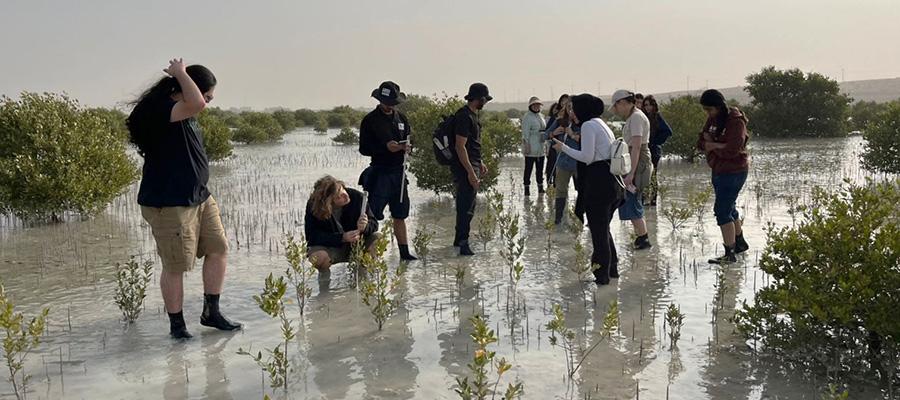
Students from American University of Sharjah (AUS) recently participated in a week-long work experience program focused on hands-on conservation activities, delivered through a collaboration between the AUS Office of Sustainability, who facilitated the program alongside the AUS Department of Biology, Chemistry and Environmental Sciences (BCE) and Emirates Nature–WWF, one of the most prominent and active partners in environmental conservation in the MENA region.
The work experience week was designed to provide students with meaningful exposure to professional conservation work. Activities included fieldwork in the mangroves of Umm Al Quwain and analysis of bat data from the mangroves. The initiative followed a mangrove monitoring excursion earlier in the year, during which students tested new biodiversity field protocols and analysed the data, including measurements of crabs, gastropods, birds, and more, with biodiversity used as an indicator of a healthy ecosystem. Throughout the week, students also participated in field days, conducting monitoring sessions that provided valuable experiential learning in biodiversity monitoring and data collection.
This experience contributed to a wider initiative under Mastercard’s Priceless Planet Coalition in the UAE, bringing together mangrove restoration and long-term monitoring led by Emirates Nature–WWF. By involving young people from AUS and the wider UAE in field-based learning, data collection and citizen science initiatives, the project sought to strengthen scientific outcomes and foster a deeper connection between communities and nature. Thanks to this collaborative approach, AUS and Emirates Nature-WWF are helping to ensure that mangrove restoration efforts deliver lasting climate, biodiversity and social benefits, beyond planting alone.
“While restoring mangroves is a vital first step, robust long-term monitoring is what turns action into impact. It allows us to understand how ecosystems recover, how biodiversity returns and how restoration delivers tangible climate and community benefits over time. What made this work truly distinctive is the way it integrated real-world conservation science with education. This is not something we can do alone. By meaningfully involving AUS students and youth in hands-on monitoring and data collection, Emirates Nature-WWF is helping to shape one of the UAE’s most impactful experiential learning opportunities—strengthening the science behind restoration while empowering the next generation of environmental leaders to actively shape the future of the nation’s coastal ecosystems,” said Fayaz Anwar, Project Officer, Emirates Nature-WWF.
“Preparing students to understand and respond to the planet’s increasingly complex and interconnected environmental challenges requires in-depth scientific training in environmental systems and practical conservation work,” said Dr. Sandra Knuteson, Senior Lecturer in the Department of Biology, Chemistry and Environmental Sciences. “As pressures on ecosystems intensify and the limits of what the planet can sustain become more apparent, experiences like this help students understand how local biodiversity research and conservation action connect to wider planetary boundaries they learn about in the classroom.”
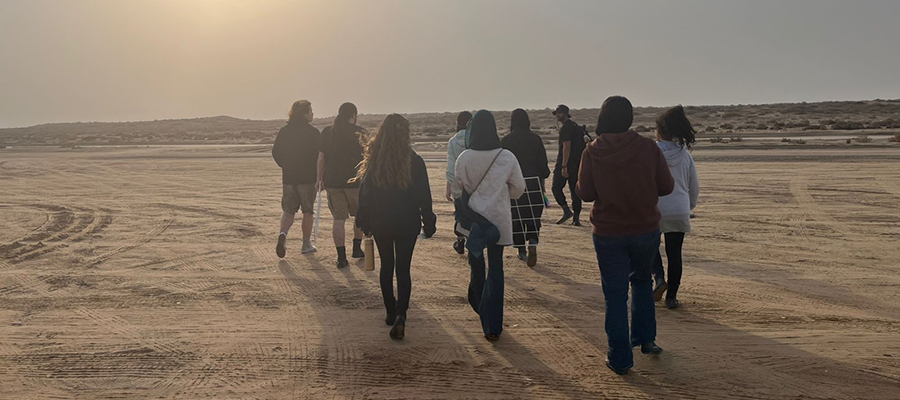
“The collaboration also provided BCE students with a week full of valuable, real-world insight into what it takes to work on impactful conservation projects with organizations of the calibre of Emirates Nature–WWF,” she added.
“Being within the mangroves and waters strongly enhanced my interest in conservation and allowed me to envision a clearer future for my career,” said Dana Khawaja, an environmental sciences and sustainability student at AUS who took part in the fieldwork.
“This collaboration with Emirates Nature–WWF allowed our students to step beyond the classroom and engage directly with real conservation work. Experiences like this are incredibly powerful as they build skills, confidence and a deeper connection with our local environment, which leads to a shared sense of responsibility towards planetary health. We’re proud to work with partners who share our commitment to hands-on learning and meaningful sustainability action,” said Nathalie Curabba, Sustainability Manager at AUS.
Graduates of the College of Arts and Sciences have gone on to prominent positions across the sector, including the current Director General of Emirates Nature–WWF, Laila Mostafa Abdullatif, who graduated from AUS in 2009 with a Bachelor of Science in Environmental Sciences. Today, this academic pathway continues through AUS’ Bachelor of Science in Environmental Sciences and Sustainability.
To find out more, visit www.aus.edu/cas/department-of-biology-chemistry-and-environmental-scienc...
For more information about Emirates Nature-WWF activities in the UAE and MENA region, please visit: www.emiratesnaturewwf.ae/en

By continuing, you will be taken to a website not affiliated with American University of Sharjah. Links to external sites are provided only for users' convenience and imply no endorsement of the site and/or its content. Note that the privacy policy and security settings of the linked site may differ from those of the AUS website.